Three sales tell the real story of the Eastern Suburbs market
$25.2 million in Bronte. $12.12 million in Bronte. $3.86 million in Randwick. One Saturday, three results — and three completely different reasons buyers paid what they paid.
On the surface, three strong auction results on the same Saturday might suggest Sydney’s Eastern Suburbs market is booming again.
I don’t think that is the correct interpretation.
Sydney remains a selective market. Buyers are price conscious, interest rates matter, and plenty of properties are still being passed in, withdrawn or negotiated after auction. Sydney’s citywide clearance rate that same week was 58.7 per cent — better than the week before, but well below the 76.1 per cent recorded a year earlier.
But when something genuinely difficult to replace comes to market, buyers are still prepared to compete.
Three sales from the one weekend demonstrate that particularly well. Each sold strongly. Each sold for a completely different reason. And understanding those reasons matters far more than the headline numbers.
522–524 Bronte Road — $25.2 million
This was not really a sale of an eight-bedroom house.
It was a sale of 1,028 square metres of extraordinarily scarce Bronte coastal land.
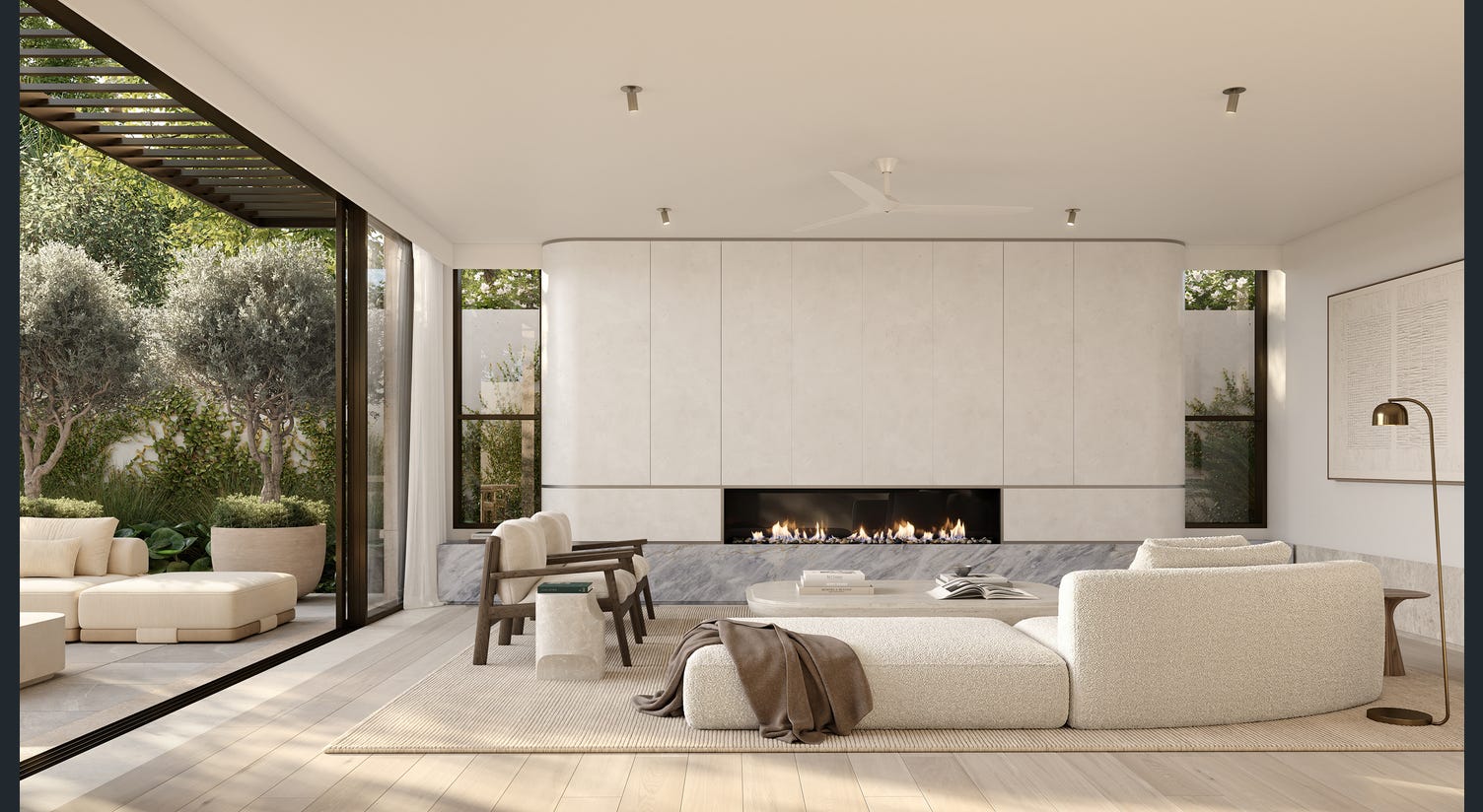
The property sold under the hammer on 17 October 2026 through Sydney Sotheby’s International Realty. It comprises eight bedrooms, four bathrooms and one garage, currently configured as four self-contained residences on one title — and it came to market in largely original condition as a deceased estate, held by the same family since 1978.
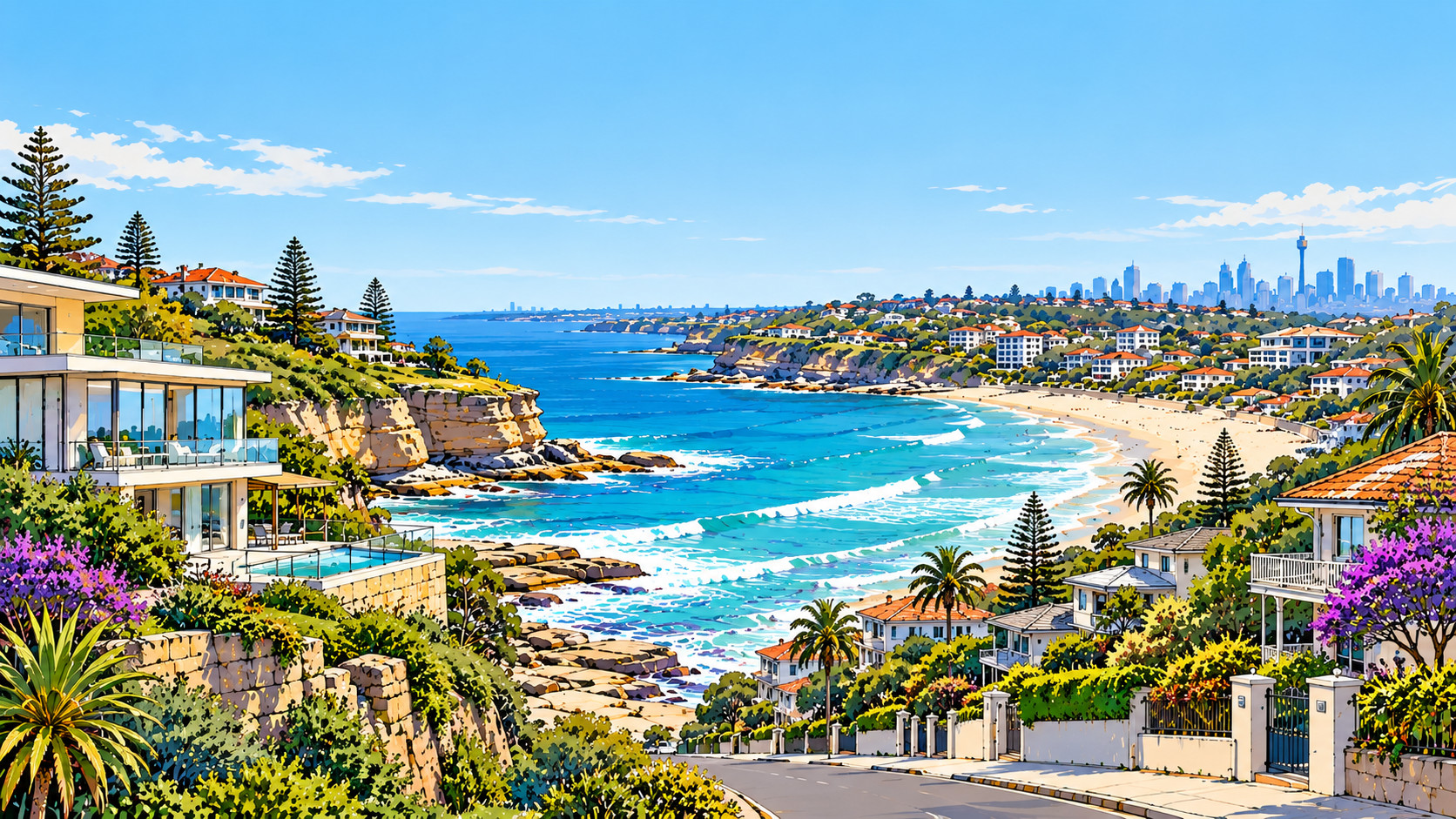
What makes it unusual is the approximately 32-metre frontage to the ocean reserve, with uninterrupted views towards Mackenzies Bay, Tamarama and Ben Buckler, and direct access through Calga Reserve to Bronte Beach and the coastal walk. The marketing also identified potential to recreate the property or investigate subdivision — subject, of course, to planning approval.
There is no reliable publicly available purchase price from 1978 that I am comfortable quoting, so I would rather leave it out than create false precision. That long ownership period is itself the story. Properties like this rarely come onto the market.
The result sits among Bronte’s highest publicly reported sales — behind the suburb record of $29.25 million set in 2023 at 3 Tipper Avenue, and alongside a small handful of transactions around the $25 million mark.
What did the buyer really pay for?
Not the kitchens. Not the bathrooms. Not the existing four apartments.
- More than 1,000 square metres of land
- An exceptional coastal position
- An unusually wide ocean frontage
- Views that are difficult to replicate
- Long-term redevelopment or reinvention possibilities
- And, most importantly — scarcity
At $25.2 million across approximately 1,028 square metres, the transaction equates to roughly $24,500 per square metre of land. That doesn’t make it a development-site rate in the conventional sense. It demonstrates what an irreplaceable piece of Eastern Suburbs coastline can command.
160D Macpherson Street — $12.12 million
The second Bronte result tells a different story.
160D Macpherson Street sold at auction for $12.12 million, substantially above its reported $11.25 million reserve. Three bidders registered and two were active, according to the weekend auction report.
The five-bedroom, three-bathroom home sits on approximately 553 square metres in an elevated position overlooking Bronte Beach. The marketing highlighted its northerly orientation and approximately 180-degree ocean and beach views. It was offered for the first time in more than 30 years.
The sale history is what makes this result particularly interesting — and it is also a lesson in why property data needs to be read carefully.
Domain’s record shows the property last sold on 19 October 1992 for $850,000. Other databases built on CoreLogic records show a further transfer in March 1994 at $1,120,000. Even the major data providers don’t fully agree with each other.
Take either figure and the arithmetic is remarkable:
- 1992 — $850,000 to 2026 — $12,120,000: more than 14 times the nominal price over 34 years
- 1994 — $1,120,000 to 2026 — $12,120,000: roughly 11 times over 32 years
It is a wonderful example of long-term Eastern Suburbs ownership — although it needs an important qualification.
A house after three decades is rarely exactly the same asset. Renovations, extensions, improvements and general capital expenditure can materially change its value. Stamp duty, finance costs, maintenance and selling costs also mean the difference between two sale prices should never simply be described as an owner’s “profit”.
Nevertheless, the history demonstrates what happens when long ownership is combined with genuinely scarce geography.
There are many five-bedroom homes in Sydney. There are very few with a sunny, elevated outlook directly over Bronte Beach. That difference is what the market prices.
187 Rainbow Street — $3.86 million
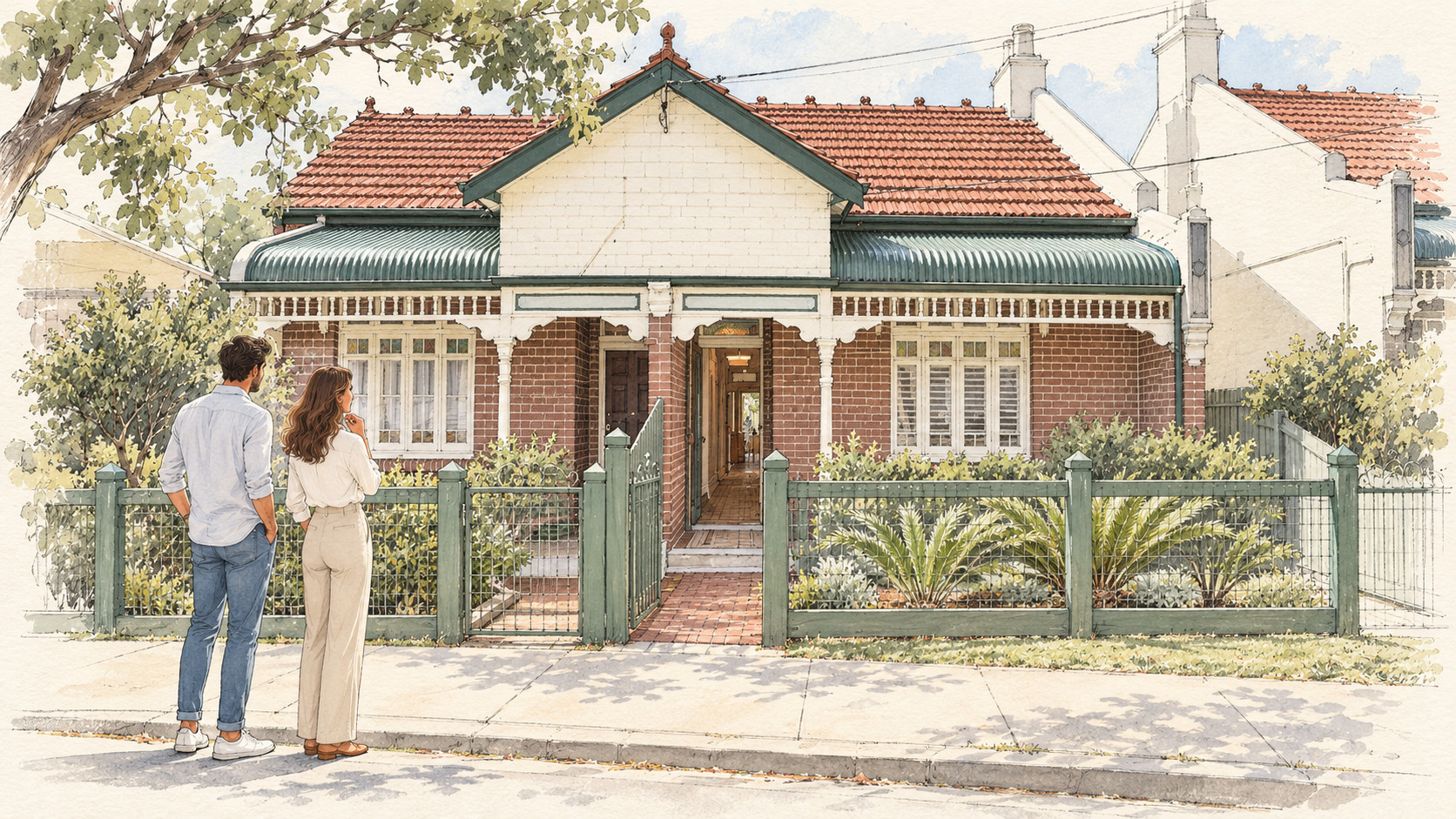
Randwick provides another useful example — but for a completely different reason.
The five-bedroom family home at 187 Rainbow Street sold under the hammer for $3.86 million. The campaign carried a $3.5 million guide and the property reportedly sold above its $3.8 million reserve, with four bidders registered and two actively competing.
The home occupies approximately 372 square metres and offers five bedrooms, three bathrooms, a garage, saltwater pool, landscaped outdoor entertaining, solar panels and EV charging — within walking distance of The Spot, Newmarket Randwick and public transport.
At first glance, someone might conclude the house went from $405,000 to $3.86 million. Technically, those are the recorded transaction prices.
But that would not tell the full story.
Domain records the current dwelling as having been built around 2011 — which means the property purchased for $1.1 million in 2009 was not the same home that sold in 2026.
That makes 187 Rainbow Street a perfect example of why historical sales data needs to be interpreted rather than simply repeated.
A previous sale price can tell you what somebody paid for the property at that time. It does not automatically tell you how much the market has risen. Between those transactions there may have been a new house, a major renovation, additional bedrooms, a pool, landscaping — and hundreds of thousands, sometimes millions, of dollars in capital expenditure.
Three sales — three completely different reasons for value
These properties sold on the same Saturday, yet the drivers behind their prices could hardly be more different. Divide each price by its land and the point becomes obvious.
A 1,028 sqm coastal holding in original condition. The buildings were almost incidental.
North-facing, elevated, directly over Bronte Beach — in an extremely tightly held pocket.
A rebuilt family house. Much of the price growth on paper is actually money put into the property.
This is why I have always been cautious about relying solely on automated estimates or suburb medians when assessing Eastern Suburbs property.
The average square metre does not have a view. A median does not know whether a house has been rebuilt. And an algorithm can struggle to understand just how rarely 1,028 square metres fronting the coastline becomes available in Bronte.
And the broader auction market?
The strength of these results should be put into perspective. Sydney’s auction market for the week ending 17 October 2026 recorded an overall clearance rate of approximately 58.7 per cent, with houses at around 53.2 per cent. The City and East performed better, at approximately 65.6 per cent — but every one of those figures sits well below the 76.1 per cent recorded over the same week last year.
Even within Bronte itself, Saturday was not universally strong. Alongside the two headline results, Domain’s published auction results for the suburb show a third house sold at $3.67 million, one withdrawn, one passed in and one rescheduled.
That is why I would not describe these sales as evidence that everything in the Eastern Suburbs is rising. They demonstrate something more useful.
Buyers are discriminating.
When a property is ordinary, compromised or overpriced, buyers are increasingly comfortable saying no. When something genuinely scarce appears, however, there can still be substantial depth in the market.
The lessons — for sellers and buyers
For sellers
The lesson is not to look at a $25.2 million Bronte sale and assume every property in Bronte has suddenly increased in value.
The lesson is to identify what is genuinely special about your property.
- Is it the land?
- The position? The view? The aspect?
- The architecture? The renovation?
- The development potential?
- Or is it simply another property competing against five similar homes?
The answer can dramatically change both the value and the appropriate method of sale.
For buyers
Historical sale prices remain extremely useful — but only if you understand what happened between one sale and the next.
A home bought for $1.1 million and later sold for $3.86 million may sound like extraordinary market growth. But if the original house was substantially rebuilt, part of that difference represents capital invested into the property.
That is why, when I research a property for a buyer, I prefer to look behind the number:
- What was actually purchased last time?
- What has changed?
- How much land is there?
- What improvements were undertaken?
- And what am I really buying today?
Sometimes the property you decide not to buy can save you the most. And sometimes a genuinely irreplaceable property warrants paying a premium.
Knowing the difference is the job.
What is genuinely special about your property?
After four decades in the Eastern Suburbs, I can tell you what your property’s real value drivers are — and what the data does and doesn’t say. One conversation, no obligation.
Call Alan — 0412 176 074Methodology and sources: auction results and sale records via Domain (preliminary results, week ending 17 October 2026) and property records; weekly clearance rates via Dr Andrew Wilson, My Housing Market. Reserve prices and bidder numbers as reported in weekend auction coverage. Sale histories for 160D Macpherson Street differ between data providers (Domain: October 1992, $850,000; CoreLogic-based records: March 1994, $1,120,000) — both are shown. Land areas and frontages are approximate. Price-per-square-metre figures are indicative calculations only.
This article is general market commentary and reflects my professional assessment. It is not financial, legal or valuation advice. Past price performance is not an indicator of future results.