Sydney buyers are negotiating harder. Some Eastern Suburbs homes still stand out.
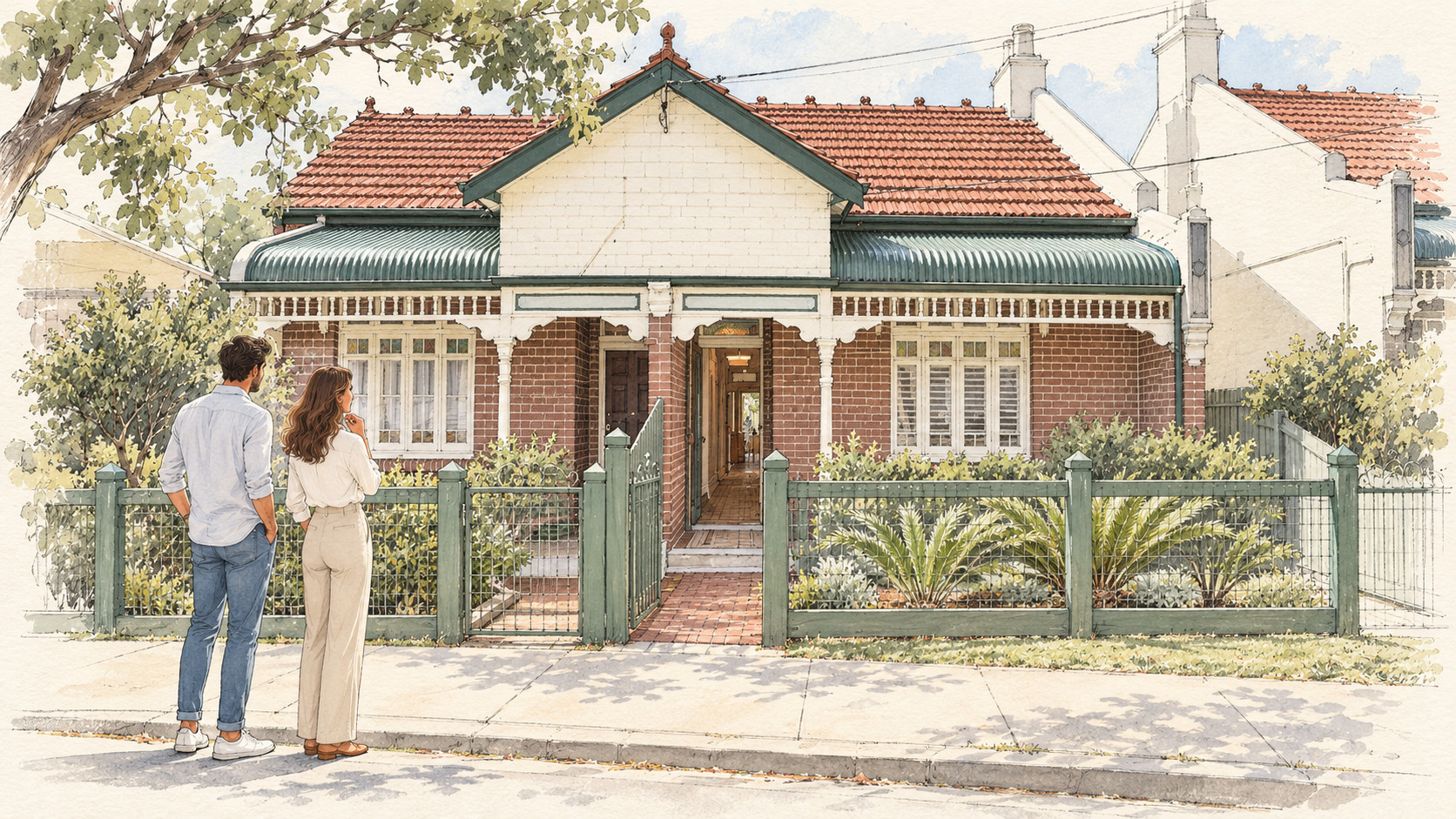
The question has changed. It used to be “what if I miss out?” Now it is “what if I buy now and pay too much?”
For a long time, the pressure on Sydney buyers was the fear of missing out. Wait another month, lose another auction, and the next property might cost more.
Today, a different question deserves more attention: “What if I buy now and pay too much?”
My reading of the current evidence is that buyers are placing greater weight on the consequences of a purchase. The price matters, but so do repayments, job security, the cost of moving and the cash left afterwards. In the Eastern Suburbs, that can produce a market where one property attracts determined competition while another struggles to secure an acceptable offer.
Confidence is weak, but buyers have not all reached the same conclusion.
The October Westpac–Melbourne Institute survey recorded a 4.7% fall in consumer sentiment to 80.4. Yet its measure of whether it is a good time to buy a dwelling improved 3.4% to 88.4. Even with that improvement, people saying it was a bad time to buy outnumbered those saying it was a good time in almost every group.
Two readings, moving in opposite directions
That combination matters. A household can feel uneasy about the economy and still see better buying opportunities. Equally, a buyer can like a property and decide that its price leaves too little room for financial uncertainty.
The shift from fearing a missed opportunity to fearing an expensive mistake is my interpretation of this environment, rather than a direct finding of a survey of Eastern Suburbs buyers.
It helps explain why a buyer might inspect more alternatives, negotiate harder or walk away when the numbers stop working.
Two recent local results show why a Sydney-wide headline cannot price an individual home.
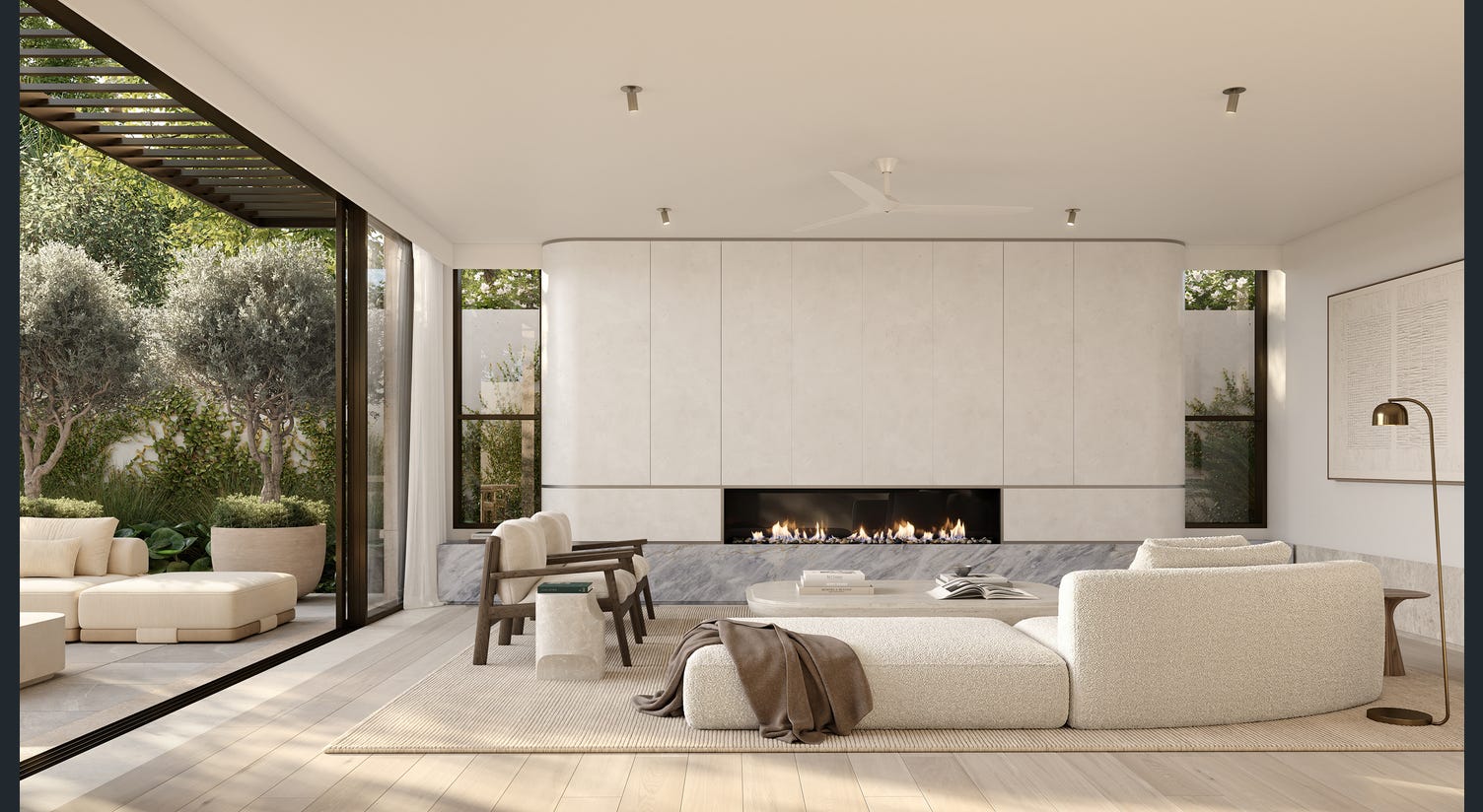
160D Macpherson Street, Bronte
A five-bedroom house on approximately 553 square metres. The published property record confirms three bathrooms and two parking spaces.
3/22 Battery Street, Coogee · overlooking Gordon’s Bay
Reported pass-in against a $2.3 million–$2.5 million guide. A pass-in is not a completed sale, and that bid should not be treated as the property’s final value.
Coogee: where the bidding stopped against the guide
These are different properties at very different price points. They illustrate variation in outcomes; they do not establish a suburb-wide trend or prove that any particular feature caused a result.
For sellers, the lesson is to examine the competing properties and the buyers within their own price bracket. A strong Bronte result does not automatically support a higher asking price for every coastal home.
My view is that buyers have more reason to distinguish between a property that offers lasting usefulness and one that requires substantial compromises. Light, layout, access, parking, condition and a building’s financial position all deserve close attention. A desirable address still needs a convincing overall proposition.
For anyone upsizing, the gap matters more than either headline price.
Consider a purely illustrative move from a $2 million property to a $3 million property. The starting price gap is $1 million.
If both properties fall 5%, the current home becomes worth $1.9 million and the next home costs $2.85 million. The gap narrows to $950,000. The owner receives $100,000 less on the sale but saves $150,000 on the purchase.
That can make a softer market useful for an upgrader. However, the properties may not move together. If the current apartment falls 8% while the desired house falls only 3%, the gap widens to $1.07 million.
Move the market. Watch the gap.
The right comparison is the likely net proceeds from your home against the realistic purchase price of the next one.
And the purchase-price gap is only the beginning.
From $1 million to $1.2 million
| Sale price of existing home | $2,000,000 |
| Purchase price of next home | $3,000,000 |
| Price difference | $1,000,000 |
| NSW transfer duty on purchase | $146,287 |
| Assumed selling commission, incl. GST, at 2% | $40,000 |
| Assumed marketing, legal, inspection and moving costs | $15,000 |
| Additional funds required | $1,201,287 |
The calculation excludes bridging finance, renovations and loan fees, and assumes existing mortgage debt is carried forward separately. Savings, equity and the existing loan determine how much additional borrowing is actually needed.
A move described as “another million dollars” can therefore require around $1.2 million before improvements to the next home.
The cost of borrowing changes what a price feels like.
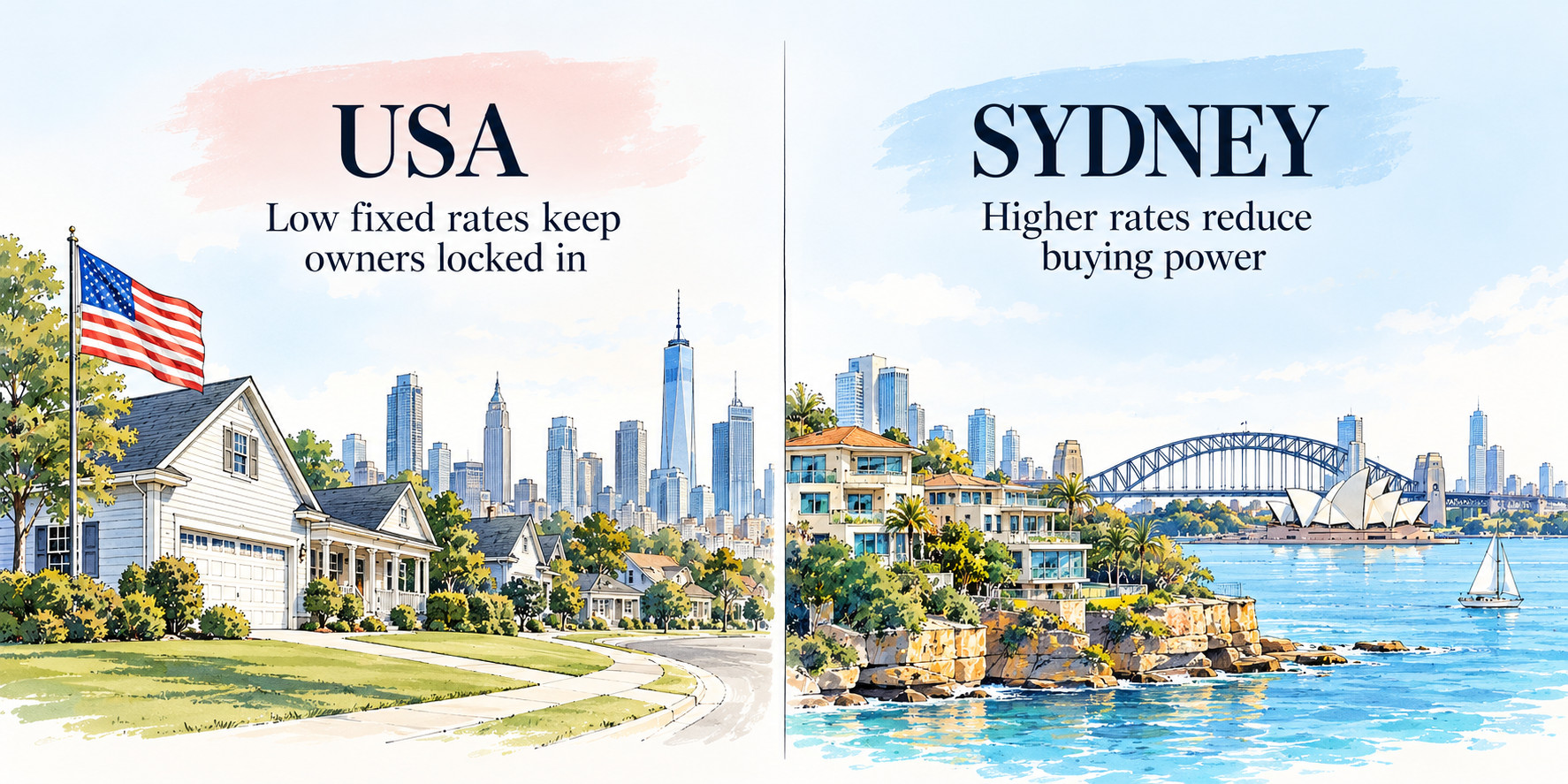
The RBA raised the cash rate to 4.60% on 29 September. Its published August lending data put the average rate on new owner-occupier principal-and-interest loans at 6.15%. That is a historical average across loans, not an October offer available to every borrower.
What an extra loan costs each month
Additional loan of $1,000,000 over 30 years.
Additional loan of $1,000,000 over 30 years.
Additional loan of $1,000,000 over 30 years.
Principal and interest, constant rate, monthly repayments, no fees. At 6.5% over 30 years, $1 million costs about $6,321 a month; at 7.5%, about $6,992.
An extra $100,000 borrowed adds approximately $632 a month at 6.5%. That gives a negotiation over $100,000 a practical meaning: it affects the household budget every month.
These calculations assume constant rates, monthly repayments and no fees. Principal repayments build equity, but the full repayment still has to come from cash flow.
For an upsizer, I would assess the whole proposed mortgage and household budget, including what happens if income falls or rates rise. The bank’s approval limit and a comfortable personal limit can be very different.
High income does not remove the need for job security.
September ABS figures put unemployment at 4.7%, with employment falling by approximately 39,000 over the month. These national figures do not establish what is happening specifically to high-income Eastern Suburbs households, but they provide relevant context for a major financial commitment.
AI adds another question for professional households: how dependable is future income as the work itself changes?
The Australian evidence warrants balance. The Department of Employment and Workplace Relations’ July 2026 report found tentative signs of slower employment growth in occupations more exposed to AI automation. It explicitly said the evidence did not establish widespread AI-driven disruption or definitively prove job losses caused by AI. Its employment analysis largely covered the period to February 2026.
Jobs and Skills Australia also finds that generative AI is more likely to assist and change work than replace entire jobs, with outcomes varying across occupations and workplaces.
For households working in areas such as finance, law, technology, consulting or marketing, the sensible exercise is to consider their own position.
- Your employer
- Your role
- Your business pipeline
- Your income structure
A large salary dependent on bonuses or one employer deserves a different assessment from dependable income backed by substantial accessible savings.
If a purchase needs two uninterrupted salaries and a strong annual bonus to remain comfortable, the household has little room for change.
That is a budgeting consideration, not a prediction that AI will cause local property prices to fall.
The value of money includes the freedom it leaves you.
An extra dollar committed to property cannot simultaneously remain available for an emergency, reduce another debt or sit in an offset account.
For example, $100,000 held in a fully effective mortgage offset against a 6.5% home loan reduces annual interest by approximately $6,500 while the balance and rate remain unchanged, before account costs. Spending those funds on a purchase removes that interest saving and reduces accessible reserves.
Inflation also means a nominal property gain is not necessarily a gain in purchasing power. Selling for more than the purchase price does not, by itself, establish a strong result after duty, interest, maintenance and selling expenses.
A home also provides somewhere to live and can improve everyday life. Those benefits matter. The task is to weigh them against the full cost, rather than assuming future capital growth will make an uncomfortable purchase worthwhile.
$100,000 in offset at 6.5%
Bring it back to the property and the person buying it.
After 35 years in real estate, my approach is to bring the decision back to the particular property and the person buying it. For sellers, that means a defensible price and a clear understanding of current competition. For buyers, it means deciding what the home is worth to them before negotiations become emotional.
Some Eastern Suburbs properties will continue to attract strong competition. Others will need to meet a more cautious market.
The best move is one that improves your life and leaves you financially comfortable enough to enjoy it.
Know your number before the market names it for you.
A private conversation on what your home would realistically achieve, what the next one will cost, and the gap between them.