The rate was higher. The distance was shorter.
Mortgage stress in 2026, measured against the 17% years — and who could buy the same house, then and now.
I began in real estate in the mid-1980s. By 1990 I was selling in the Eastern Suburbs, and mortgage rates were around 17%. I watched what that did to buyers and sellers at the time — and I still hear the number quoted whenever a younger buyer says money is tight. “You think this is hard? We paid seventeen.”
It is a fair point. It is also the wrong comparison.
The rate is only one part of the sum. The other two are the size of the debt and the income that services it. On those measures, today’s borrower is carrying the heavier load.
The debt, not the rate
The Reserve Bank lifted the cash rate to 4.60% on 29 September — the fourth increase this year. That is nowhere near 1990. The loans are.
Analysis reported by realestate.com.au this month puts the average Sydney mortgage at $84,594 in 1990 and $841,693 today. Repayments on that loan now take about 66% of median income. Brisbane sits near 59%, up from 46%. Adelaide is at 57%, up from 42%.
Mortgage repayments as a share of median income
A modest rate on a very large debt can cost a household more than a brutal rate on a small one.
The same is true of the step up. In 1990 the gap between the home you owned and the next one up was a sum most working households could borrow. Today that gap alone can run to millions. Rates were higher then. The distance was shorter.
The Bureau of Statistics figures tell the same story: the average new home loan nationally was about $724,000 in the March quarter, up roughly 9% in a year. In NSW the average investor loan is about $851,000.
Take a $1 million loan over 30 years. One percentage point — from 6% to 7% — adds about $650 a month. Close to $8,000 a year, after tax, on top of strata levies, insurance, council rates and school fees.
Pressure is not failure
None of this means a wave of forced sales.
The Reserve Bank’s October Financial Stability Review found that most borrowers remain resilient. Arrears have edged up but are still low. Employment is strong, and most owners hold savings and substantial equity. PropTrack makes a similar argument — most people who sell are still selling at a profit.
There will be individual households in real difficulty. There always are. But pressure and failure are different things. Most owners under pressure cut back — the renovation waits, the holiday shrinks — long before they sell.
What it does to prices
Mortgage pressure moves a market without a single forced sale.
It starts with borrowing capacity. Banks assess every applicant at a higher rate, so the buyer who could borrow $1.5 million last year now qualifies for less. Then confidence goes. A buyer approved for $2 million rarely spends $2 million when the next rate decision is uncertain.
The numbers already show it. New home loan commitments fell 5.4% in the June quarter, and the value of lending fell 5.2%. PropTrack recorded four straight monthly falls to July, leaving national prices about 1.8% below their March peak. Sydney fell 0.6% in July — the largest of any capital.
Two markets in the Eastern Suburbs
Here, the effect is uneven.
A couple buying a $2 million apartment with a $1.4 million loan feels every rate rise. A downsizer buying the same apartment with the proceeds of the family home does not. Both can turn up to the same inspection.
So two markets now run side by side — one that depends on finance, and one that runs on equity. In Double Bay, Bellevue Hill, Rose Bay and Woollahra, the second is large.
As debt gets dearer, the buyer who doesn’t need it gets stronger.
I am watching apartments most closely. When capacity tightens, buyers tend to stay in the suburb and change the property. The house buyer looks at a three-bedroom apartment. The three-bedroom buyer looks at two. The buyer who wanted new looks at a ten-year-old building. Demand moves between categories more than it disappears — which is why this market has to be read building by building.
If you are selling
The price your neighbour achieved a year ago was paid by a buyer with a lower rate, more borrowing capacity and less to choose from. That buyer is no longer in the market. Today’s buyer sets today’s price.
That does not mean discounting a good property. It means knowing who your buyer is likely to be, how they are funding the purchase, and what they can pay now.
My view
I don’t expect a morning when thousands of owners are forced to sell at once. I expect something slower. Buyers get more careful. Campaigns run longer. Expectations adjust. Finance-dependent buyers step down a bracket.
In my assessment, borrowing capacity will be one of the strongest influences on price for the next stretch of this cycle. 17% was hard. A 6% rate on $1.5 million is a different kind of hard — and it is the one this market has to price.
Alan Weiss
Know who your buyer is before you set the price.
An appraisal with me covers more than a figure. We look at who is likely to buy your property, how they will fund it, and what that means for timing and price. By appointment, at your home or a local café.
Request a free appraisal Begin a conversation — 0412 176 074- Reserve Bank of Australia — Monetary Policy Decision, 29 September 2026.
- Reserve Bank of Australia — Financial Stability Review, October 2026.
- Australian Bureau of Statistics — Lending Indicators, March and June quarters 2026.
- PropTrack — Home Price Index, July 2026.
- Australian Bureau of Statistics — Average Weekly Earnings, 1992 and May 2026.
- InfoChoice — history of standard variable home loan rates, 1990 to 1993.
- realestate.com.au — mortgage repayment analysis, 1990 and 2026, October 2026.
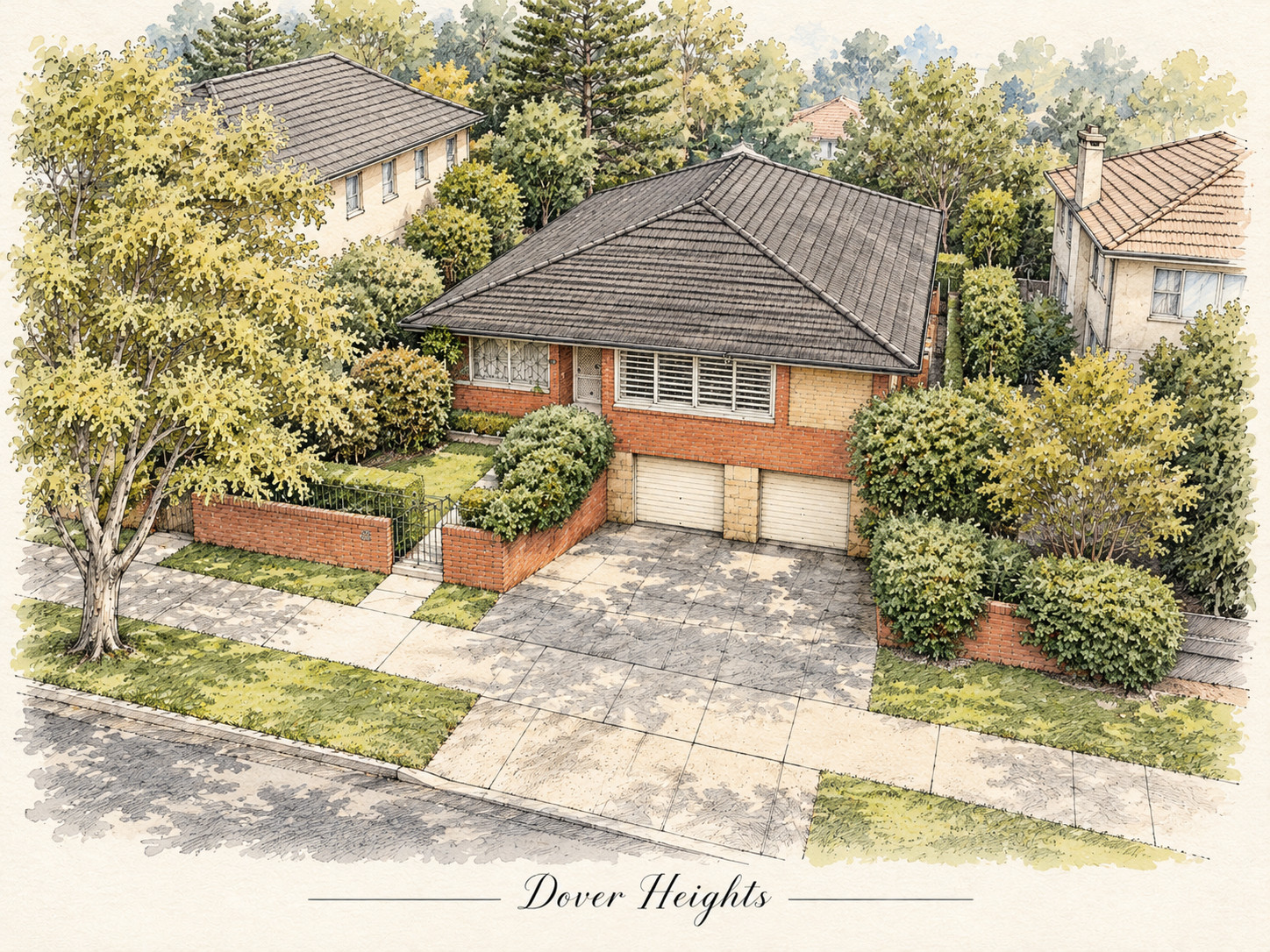
The $1 million loan example is an illustration only: principal and interest over 30 years, comparing 6% and 7%. The Dover Heights example uses my 1992 sale price and my own estimate of today’s value. The buyer comparison is illustrative: a 20% deposit, a 25-year principal and interest loan, repayments at 30% of gross income, and average full-time ordinary earnings of about $30,500 a year in 1992 and $108,000 in 2026. Figures are rounded. Forward-looking statements are my professional assessment, not a forecast.
General information only. It does not take account of your circumstances and is not financial advice. Alan Weiss is an independent contractor for eXp Australia.