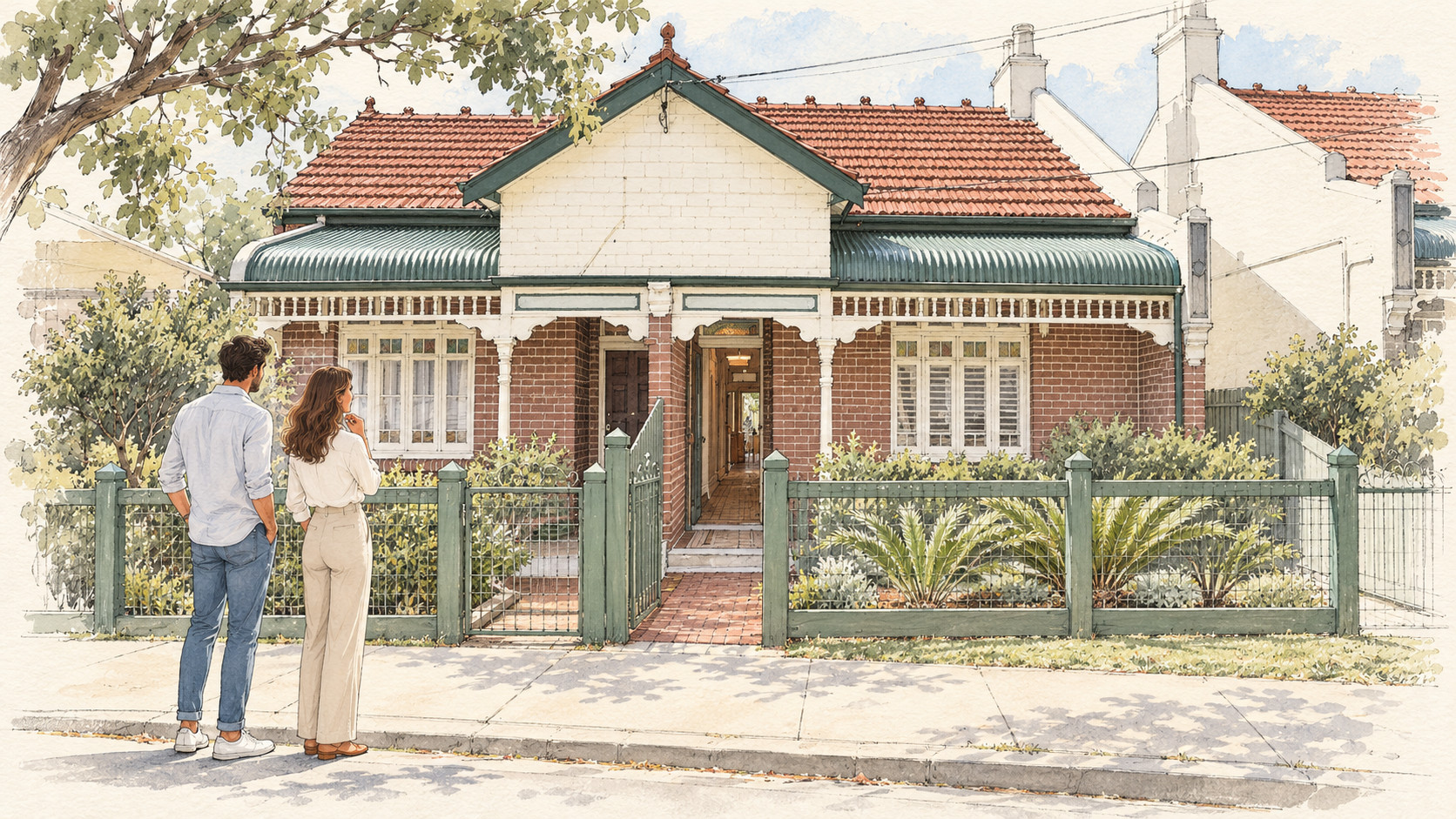
“Off-market” is the most seductive phrase in real estate — the promise of a door only the well-connected may pass through. Having spent thirty-five years on the inside, I can tell you what it usually means. And it is rarely what you have been told.
here is no phrase in property quite as seductive as off-market. It suggests privilege. It tells the buyer they are being shown something the public cannot see, ahead of the crowd, through a door only the well-connected are invited to pass through. It tells the vendor that their home is too special, too discreet, to be paraded through an ordinary campaign. Both flatteries are doing a great deal of quiet work — and almost none of it is being done for you.
I want to explain, plainly, what an off-market sale usually is. Not because the practice is always wrong — it is not, and I will come to the genuine exceptions — but because once you understand the machinery, the spell tends to break. And a vendor who understands the machinery makes better decisions than one who is simply charmed by it.
What it looks like from the inside
I spent much of my career within the industry, including its larger agencies, and I can describe the mechanism without guessing. When a property would not sell — when the campaign stalled, or the vendor’s expectation sat above what the open market would pay — it was not quietly held for a special buyer. It was uplisted. The details were sent out to a network of buyers’ agents, who would then carry it to their own clients and present it as a discreet, off-market opportunity that had come to them through their connections.
So the “private buyer” you may be told about is, more often than not, simply another agent — working from the very same pool of public listings you could find yourself, repackaging a property that did not sell in the open into something that sounds exclusive in private. The exclusivity is in the framing, not in the buyer.
The exclusivity is almost always in the framing, not in the buyer.
Why the label so often means “overpriced”
Here is the part that matters most, and it is a matter of simple logic rather than cynicism. A property sold off-market is sold without competition. There is no campaign, no auction, no underbidder, no genuine test of what the market will bear. And the one party who benefits from the absence of competition is, always, the party on the other side of you.
For a buyer, when an agent insists a property is a rare, secret, off-market chance, that framing is frequently the tell of an asset that could not sell in the open — and the “premium for privacy” is simply a premium. For a vendor, an off-market sale most often means leaving money on the table: accepting the first acceptable number rather than discovering the best one, because no competing buyer was ever invited to push it higher.
When off-market is legitimate
I promised I would be fair, and fairness matters here, because the practice is not a fraud — it is a tool, and like any tool it can be used well or used lazily. There are genuine reasons a property is best handled quietly:
When discretion genuinely serves the vendor
- A high-profile or sensitive owner for whom privacy has real value, and who accepts the likely cost to price as a fair trade.
- A deliberate, short pre-market test — gauging serious interest at a strong number before committing to a full public campaign.
- Deceased estates, separations, or other circumstances where a discreet process spares a family unwanted attention.
- A genuine, pre-existing buyer prepared to pay a price at or above what an open campaign would realistically achieve.
The distinction is straightforward. Off-market is legitimate when it is a considered choice made for the vendor’s benefit — and questionable when it is a default reached for the agent’s convenience, or a story told to a buyer to justify a number the open market would never have supported.
What this means for your next move
If you are selling, be wary of being gently talked out of a proper campaign in favour of a quiet sale that happens to suit the agent’s timeline more than your result. Ask the obvious question — if this buyer is real and the price is strong, why would competition hurt me? If you are buying, treat “rare off-market opportunity” not as a privilege but as a prompt to do your homework on what the property is actually worth, because the open market is no longer hiding anything from you.
This is precisely why I believe a single, experienced adviser should stand on both sides of your move. When I am advocating for you across the sale and the purchase together, I have no incentive to dress up a quiet deal as a favour. I will tell you when discretion genuinely serves you, and when “off-market” is simply the word being used to talk you into less than your property is worth.