New doesn’t mean safe. It means young.
More than half of recent New South Wales apartment buildings have had a serious defect. The newer ones look cleaner — and that may be the most misleading number in the report.
Almost every apartment buyer I sit with eventually asks the same question, in one form or another: how do I know this building won’t turn into a money pit? It is the most rational question in property, and for years the honest answer has been that you can’t be certain. A report released by Building Commission NSW in November 2025 puts a figure on the fear.1
A little worse than a coin toss
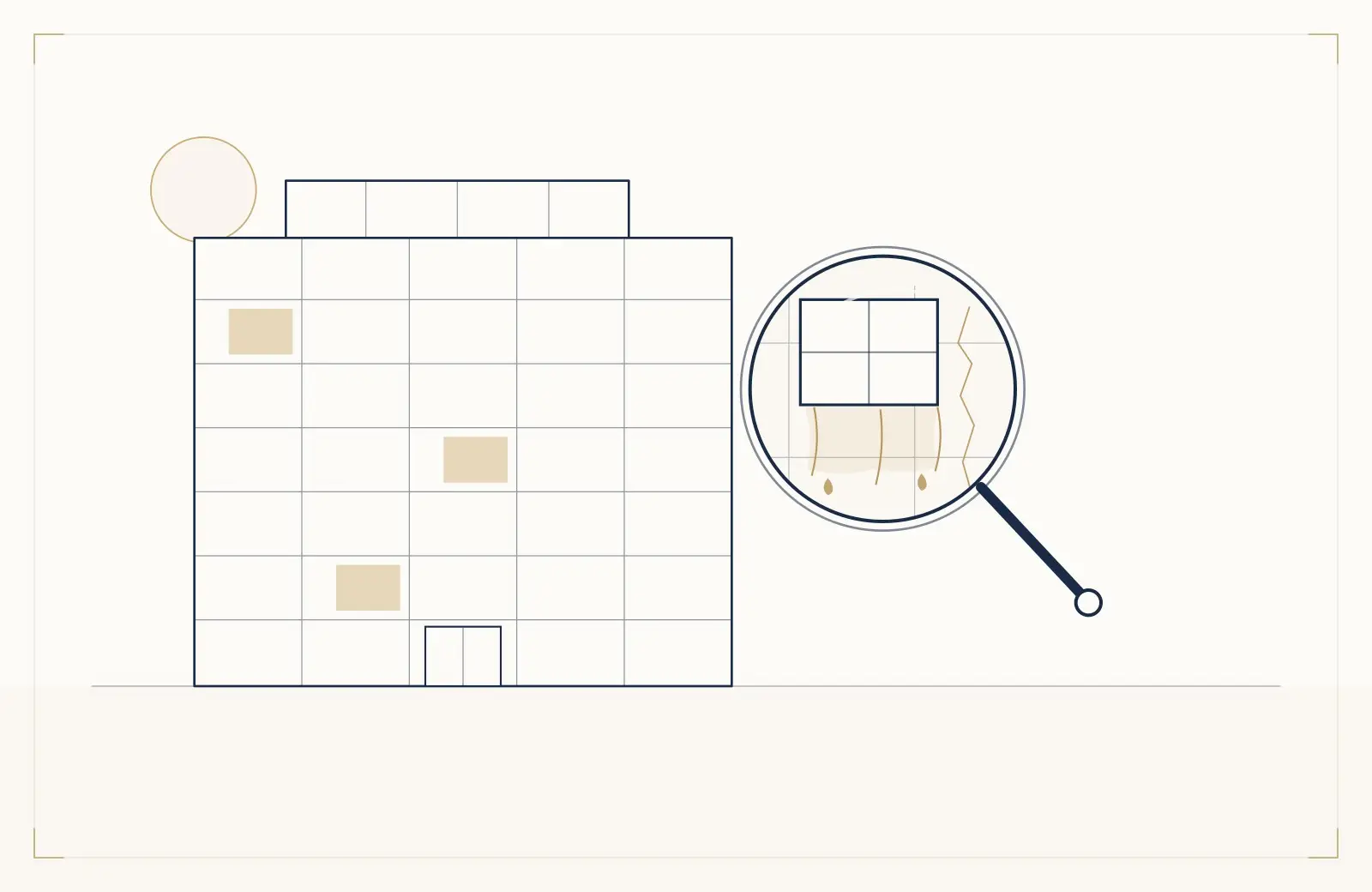
Of the 520 strata buildings surveyed, 53 per cent had a serious defect in common property within six years of construction — structural, fire, waterproofing, façade, services or cladding. That is unchanged from the previous survey two years earlier. Waterproofing was the most common, found in 44 per cent of buildings; fire safety systems in 28 per cent.1 In plain terms, it is a little worse than a coin toss that a recent New South Wales apartment block carries a serious fault.
The money is not trivial. The owners corporations that could account for it had spent 45 million dollars on rectification — an average of 215,400 dollars a building. Insurance was affected for 74 per cent of buildings with defects, and 60 per cent wore higher premiums.1 But the part that should stay with a buyer is the human cost. Forty-seven per cent reported the stress had touched their mental health; 45 per cent reported declining confidence in strata living. The case studies read like cautionary tales — water running through walls onto carpets, owners forced to sell at a loss, one building where only two of the original owners remained, another staring at a repair bill near 4 million dollars after the builder went broke before the matter reached court.1 That is what people are actually frightened of. Not an abstraction — a special levy and a sleepless tenant.
The most misleading number in the report
Here is where the report rewards careful reading. On the surface it carries an encouraging line: newer buildings show far fewer defects. Only 21 per cent of buildings registered in 2024 reported a serious defect, against 69 per cent of those from 2018.1 You will see that quoted as proof the reforms have fixed the problem. Be careful — the report itself warns against that reading.
When you compare buildings of the same age at each survey, the difference all but disappears. There is no real improvement, only a younger building that has not yet had time to fail. The clincher sits in the data. The 2018-registered buildings reported 46 per cent waterproofing defects in the earlier survey and 66 per cent two years later — the same buildings, more faults found, simply because time kept exposing them.1 A brand-new block is not a proven block. It is an untested one. That distinction is the whole game, and most buyers have it backwards.
A brand-new block is not a proven block. It is an untested one.
An industry building more, for less
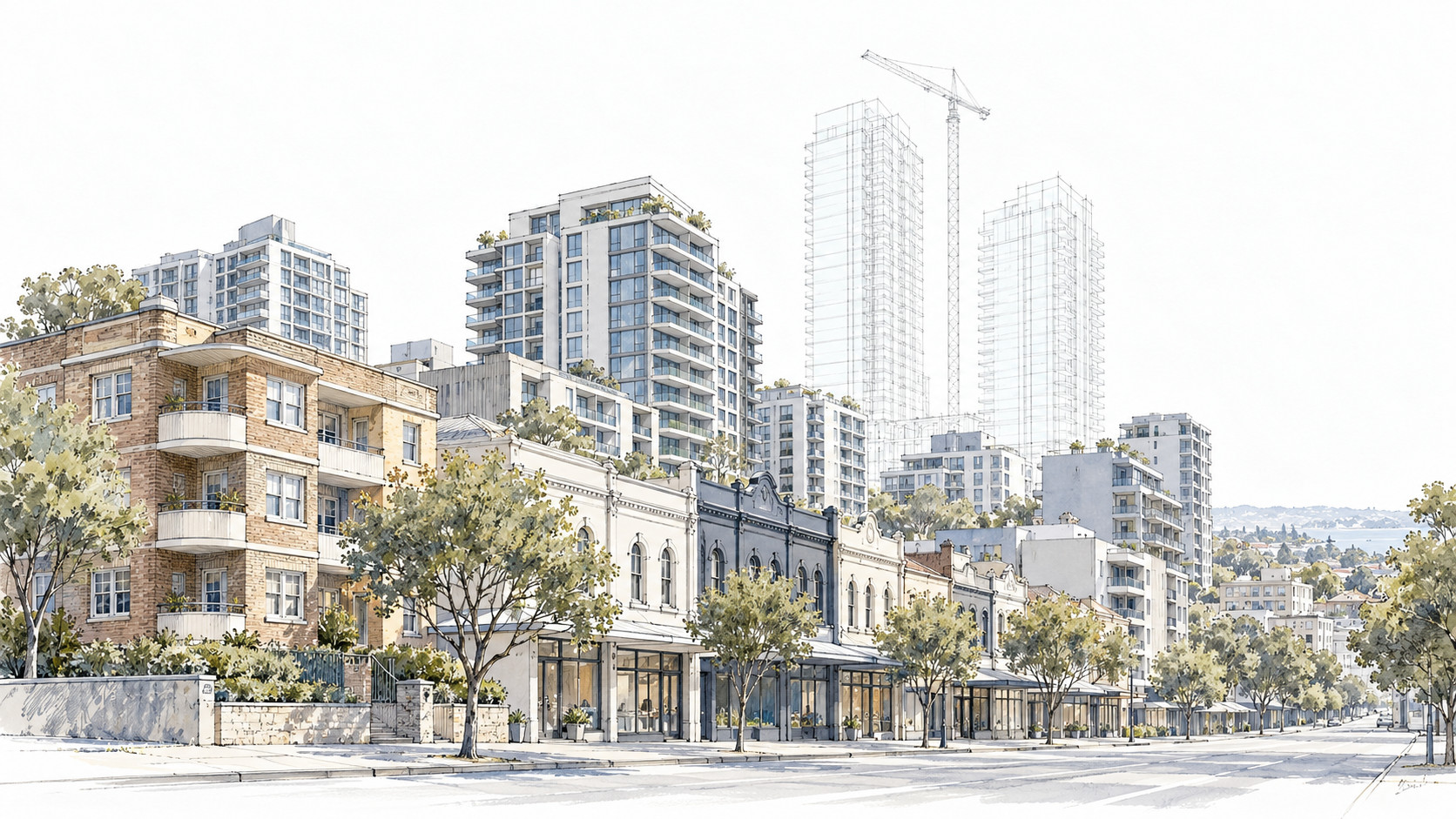
This is where I’d ask buyers to look at the market they are buying into, not just the data behind them. The federal government has committed to building 1.2 million new homes by 2029, with New South Wales carrying 377,000 of them, and apartments are the bulk of what must be delivered.2 We are asking the industry to build more, and faster, at the very moment its economics are at their tightest.
Construction costs sit almost 40 per cent above pre-pandemic levels, even after the rate of increase cooled.3 Construction is the single largest source of company collapses in the country, with roughly 2,636 builders becoming insolvent in the year to March 2025 alone.4 And the national housing council’s own analysis has found mid-rise apartments struggle to clear a normal developer margin in the capital cities without cheaper land or a subsidy.3 Hold those three facts together — heavy demand for contractors, costs near record highs, and a thin or absent margin on the finished product.
When demand is high, input costs are high, and the price an apartment can fetch is flat or soft, something in the middle has to give — and the thing that gives, historically, is the part the buyer cannot see. I am not predicting it. I am naming a risk, and the strata report already shows its fingerprints. In 23 per cent of unresolved defect cases the builder or developer was no longer in business.1 Strata managers described developers winding up entities, phoenixing, and trades deliberately splitting jobs to stay under the 20,000-dollar threshold that triggers compliance and insurance.1 None of that is the behaviour of an industry with margin to spare.
How to read a building
So, do you avoid units? No — and I’d be the last to say it. Apartments are how most people enter this market, and how many of my downsizing clients leave the family home gracefully. The point isn’t fear. It’s diligence.
Commission your own inspection. The report is blunt that the government’s building-bond inspections are visual and non-invasive, and miss the very things owners later pay for.1 Read the strata records before you fall in love — the levies, the capital works fund, the fire safety statements, the meeting minutes. Look at who built it, and whether that entity still exists to stand behind it. Favour a building that has already passed through the early-failure window with a clean, well-funded plan over the gleaming new release that simply hasn’t been tested yet. And price the risk in: a defect history, or its absence, belongs in the offer.
Read the building the way you’d read the vendor — on the evidence, not the finish.
The buyers who get hurt are almost always the ones who assumed that new meant safe. It doesn’t. It means young. Read the building the way you’d read the vendor — on the evidence, not the finish — and the fear that empties so many open homes turns into something far more useful: a checklist.
Before you fall for the finish, read the building.
The strata records, the capital works fund, who built it and whether they’re still standing behind it — a considered read before you buy, or before you sell. No pressure, no agenda.
- Building Commission NSW, serious building defects study (released November 2025); 520 strata buildings surveyed.
- Australian Government housing target — 1.2 million new homes by 2029; New South Wales share of 377,000.
- National Housing Supply and Affordability Council analysis; construction cost movements (~40 per cent above pre-pandemic levels).
- Construction industry company insolvencies, year to March 2025 (~2,636).
This article is general market commentary and reflects the author’s personal opinion as at the date of writing. It is not financial, legal, taxation or building advice, nor a property appraisal. The forward-looking views on construction-quality risk are the author’s assessment, not findings of the cited reports.