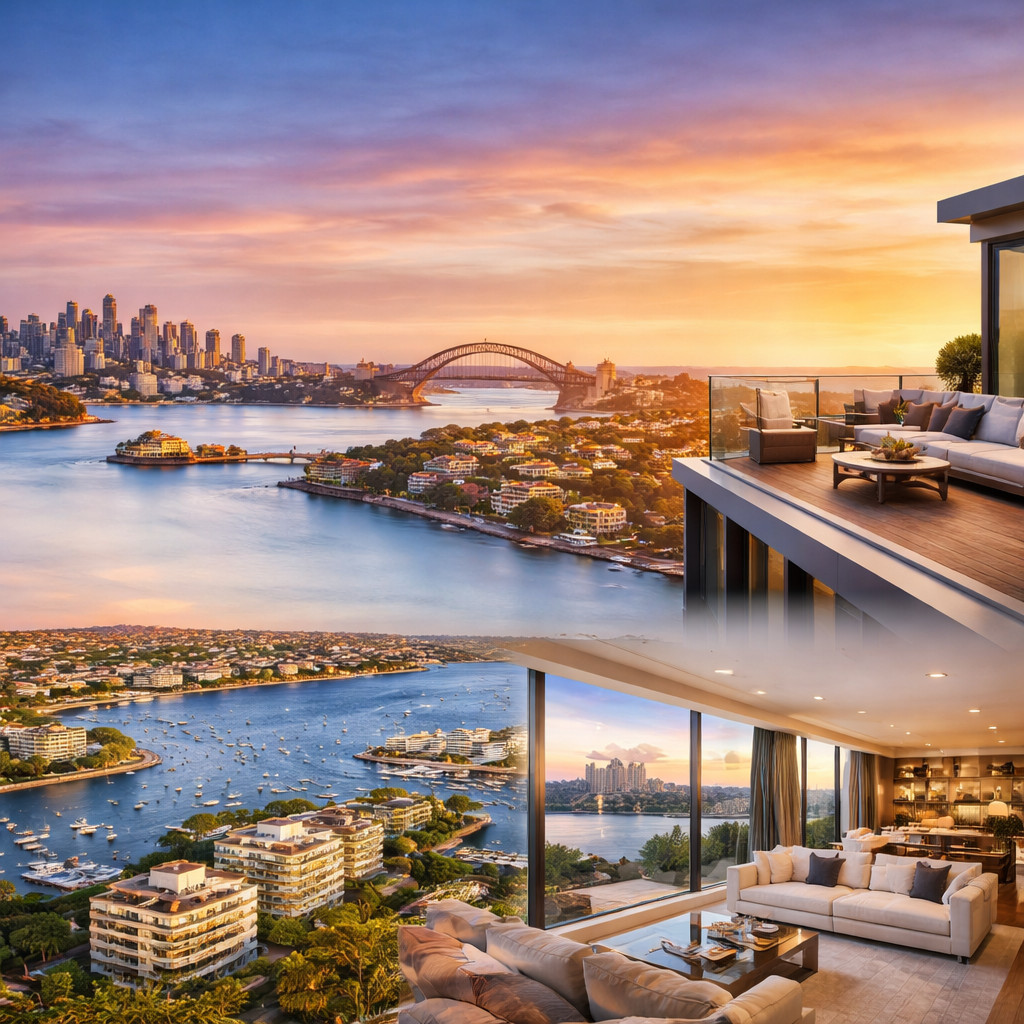
Sydney’s Eastern Suburbs are evolving—and the data is now confirming what many of us are seeing on the ground.
Three-bedroom apartments have shifted from being a secondary option to a primary housing choice. But this isn’t just a story of demand. It’s about pricing pressure, design evolution, and a growing disconnect between what buyers want and what the market is delivering.
A Market Shift You Can Feel
Across the Eastern Suburbs, a clear pattern is emerging.
Families priced out of houses, downsizers selling long-held homes, and professionals needing flexible living are all targeting the same type of property—three-bedroom apartments that offer space and functionality.
Demand has increased—but affordability is now becoming a real constraint.
High prices for new apartments are pushing some buyers to the sidelines, while others are becoming far more selective. At the same time, concerns around build quality and long-term performance, particularly in newer developments, are playing a much bigger role in decision-making.
Buyers are taking longer, asking more questions, and in many cases, choosing to wait rather than compromise.
What the market is clearly signalling is this:
Buyers want more space, better views, and genuine functionality.
The Design Gap: Old Stock vs New Expectations
Most of the three-bedroom apartments trading today were built under older design standards.
Typically, these apartments sit in the 120–130sqm internal range, with tighter living areas and layouts that don’t always suit long-term living.
Over the past five years, there was a noticeable shift toward larger, oversized apartments, generally ranging from 140sqm to 190sqm internally. These were designed to attract downsizers and owner-occupiers looking for a true alternative to a house.
Sales evidence consistently shows that these larger apartments outperform—both in price and demand.
But the reality in 2026 is different.
With land and construction costs having increased significantly, delivering these larger formats is becoming far less viable. The result is a growing disconnect between what buyers expect and what the market can realistically deliver.
Price Per Square Metre: Understanding the Numbers
To understand where the market is heading, you need to look at price per square metre.
For new developments, pricing is driven by feasibility. Construction costs for high-end product are now typically between $15,000 and $20,000 per sqm. Once you factor in land acquisition, finance, consultant costs, marketing, and a developer margin, the end product needs to be sold at a much higher level.
Across the Eastern Suburbs—from Bondi Junction through to Double Bay and the beachfront—new three-bedroom apartments are now generally trading between:
 $40,000 to $100,000 per sqm (internal)
That’s a significant range, and it reflects the differences in:
-
- Position
-
- Views
-
- Building quality
-
- Design and finish
At the top end of the market, buyers are no longer thinking in terms of “price per bedroom.”
They’re making decisions based on quality of living, and importantly, how the purchase compares to the value of their existing home.
For many, it’s not just about what they’re buying—it’s about the cost of the move.
That includes what their current home will achieve, the gap between selling and buying, and whether the lifestyle upgrade justifies that difference.
Bondi Junction: Two Markets Emerging
Bondi Junction remains the most active apartment market in the Eastern Suburbs, but the data shows a clear divide.
Recent sales indicate around 20–25 three-bedroom transactions over the past 12 months, with pricing separating into two distinct categories.
Standard apartments—typically lower floors with limited outlook—are trading between $2.0M and $2.4M.
Once you move into higher floors with views, pricing shifts quickly into the $2.5M to $3.8M+ range.
Recent comparable sales include:
-
- Unit 1503, 1 Spring Street – high floor with views – $3.55M (late 2025)
-
- Unit 902, 101 Grafton Street – district outlook – $2.68M (mid 2025)
-
- Unit 604, 109 Oxford Street – lower floor – $2.22M (early 2026)
What consistently drives pricing in this market is elevation, aspect, and outlook.
Rose Bay: Scarcity and Stability
Rose Bay remains a tightly held market with limited turnover.
Typically, fewer than 20 three-bedroom apartments trade each year, with pricing generally sitting between $2.8M and $3.6M, and premium stock exceeding $4M.
Recent transactions include:
-
- 3/45 Dover Road – boutique block – $3.25M (2025)
-
- 7/109 Royal Sydney Golf Club precinct – harbour glimpse – $3.85M (2025)
The key here is consistency. Well-located, well-designed apartments continue to perform, particularly those offering privacy and outlook.
Double Bay: A Prestige Apartment Market
Double Bay operates in a completely different category.
With very limited turnover—often fewer than 10–15 transactions annually—pricing typically ranges from $5M to $9M, with premium residences exceeding $10M+.
Example:
-
- Ocean Avenue penthouse-level residence – harbour views – circa $11M+ (off-market, 2025)
Buyers in this market are not comparing apartments—they are replacing high-value homes. The focus is on design, quality, and lifestyle, not price alone.
Edgecliff: The Value Gap
Edgecliff continues to present a relative value opportunity within the Eastern Suburbs.
Three-bedroom apartments are generally trading between $1.8M and $2.5M, with renovated or view properties achieving up to $2.8M+.
Recent sales include:
-
- 12/268 New South Head Road – older style, large layout – $1.95M (2025)
-
- 18/186 Ocean Street – renovated with views – $2.55M (2026)
This places Edgecliff roughly 20% to 40% below neighbouring suburbs, while still offering strong fundamentals including transport access and proximity to Double Bay.
Final Thoughts
The three-bedroom apartment market in Sydney’s Eastern Suburbs has become a two-speed market.
On one side, there is functional stock competing on price.
On the other, premium stock—larger, better positioned, often with views—competing on lifestyle.
And the gap between the two is widening.
As we move further into 2026, buyers are more informed, more cautious, and far more selective.
Because ultimately, they’re not just buying a property—
they’re buying how it will feel to live in, and how it will perform over time.