Market commentary · August 2026
Thank you for reading this post, don't forget to subscribe!Why 70% of Australia’s approved apartments may never be built — and what it means for buyers
Australia is approving apartments faster than it can build them. The collapse of Melbourne’s $2.7 billion STH BNK project — despite extraordinary pre-sales — shows how much the economics of development have changed, and what buyers and site owners should now be asking.
Australia has a housing shortage. Governments are rezoning land, lifting building heights and approving thousands of new apartments. Yet an uncomfortable reality is settling over the development industry: an approval does not mean a building will be built — and even strong off-the-plan sales no longer guarantee that a project is financially viable.
No case makes the point more clearly than STH BNK by Beulah in Melbourne’s Southbank. The proposed $2.7 billion project — a 102-storey tower that was to be Australia’s tallest building, alongside a second tower — launched its apartments in 2022 and reportedly took $400 million in sales on the first day. More than 80 per cent of its 705 apartments were reportedly sold, representing close to $1 billion in sales value, with deposits of roughly $57 million across some 540 contracts held in trust.
The project still could not get out of the ground.
Construction costs escalated. The project’s management entity entered voluntary administration in early 2025 with debts exceeding $100 million. This year, receivers began selling the sites — one parcel, Hanover House, reportedly sold for about $26 million after Beulah had paid more than $40 million for it in 2021 — and purchasers are now being told their deposits will be returned.
2018
STH BNK unveiled following an international design competition — twin towers pitched as Australia’s tallest building.
2020
Planning approval granted for the $2.7 billion project.
2022
Apartments launch — a reported $400 million in sales on day one. Over 80 per cent of 705 apartments eventually contracted.
2025
Project management entity enters voluntary administration with debts above $100 million. Construction never began.
2026
Receivers sell sites — Hanover House for a reported $26 million, well below the 2021 purchase price. Buyer deposits of about $57 million to be refunded.
That should send a message through the entire apartment market. If a project with that level of buyer commitment cannot proceed, the problem is not demand. The problem is the arithmetic.
Selling the apartments is only half the equation
For years, the developer’s playbook was straightforward. Sell enough apartments off the plan, satisfy the bank’s pre-sale requirement, draw down construction finance, start building.
That equation has broken down. A developer may have sold apartments in 2022, 2023 or 2024 at prices based on the construction costs, interest rates and profit margins of that period. But the building has to be constructed at today’s cost. Labour is dearer. Materials are dearer. Finance is dearer. Projects take longer, and holding costs run the whole time. Meanwhile, the apartments already exchanged under contract cannot simply have their prices lifted because the developer’s costs have risen.
That combination can destroy a project’s feasibility — and Beulah is not an isolated example. A Townsville marina project was placed on hold after construction had commenced, with purchasers offered their deposits back. Buyers in a major Brisbane development had contracts terminated after the developer cited escalating construction costs and finance difficulties — with some later offered the chance to buy back in at substantially higher prices. In Western Sydney, a large developer has been selling development assets under financing pressure, including a site approved for more than 100 apartments. The circumstances differ, but the pattern is familiar: delay, redesign, refinancing, sale of the site, cancellation of contracts, return of deposits — or, in the worst cases, administration.
The national numbers are the real story
The real story is not one Melbourne skyscraper. It is the widening gap between the number of apartments Australia approves and the number it actually builds.
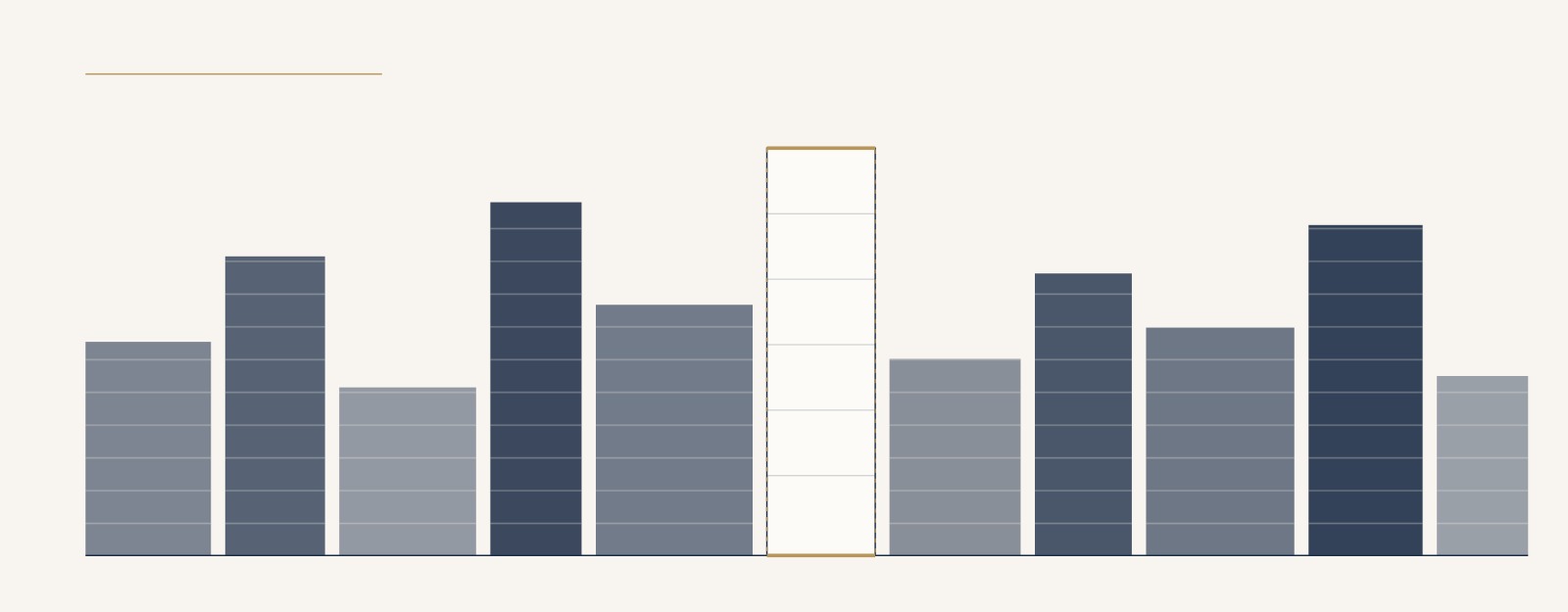
Urbis data reported by Reuters in August 2026 indicates that almost 70 per cent of apartments approved across Australia since 2020 have not progressed to construction. On the Gold Coast the figure was 83 per cent. Sydney was around 64 per cent, and Melbourne 62 per cent. Separate Urbis research puts the figure for metropolitan Sydney at 75 per cent — a number the NSW Government has acknowledged by expanding its Pre-Sale Finance Guarantee to help stalled projects reach construction.
Source: Urbis data reported by Reuters, August 2026; Urbis research on metropolitan Sydney, reported June 2026. Melbourne sits at around 62 per cent.
The direction of travel is not improving. New apartment commencements fell 20.7 per cent in the March quarter of 2026, and completed home construction is running about 27 per cent below the pace needed to meet the National Housing Accord’s target of 1.2 million homes by 2029 — a target the Housing Industry Association now expects Australia to miss by about 15 per cent.
~70%
of apartments approved nationally since 2020 not yet commenced (Urbis, via Reuters)
20.7%
fall in apartment commencements, March quarter 2026 (ABS data, reported by Reuters)
27%
shortfall in completions against the pace required for the 1.2 million-home target
Australia does not have a shortage of ideas, or of development applications, or — in many locations — of approved apartments. It has a shortage of projects that remain financially viable enough to actually build.
The feasibility gap
Every development ultimately comes back to a simple calculation. Land, construction, finance, consultants, government charges, marketing, time and the developer’s margin must together be less than the completed value of the project. When one or two of those costs rise, a project can absorb them. When nearly all of them rise together, the margin disappears.
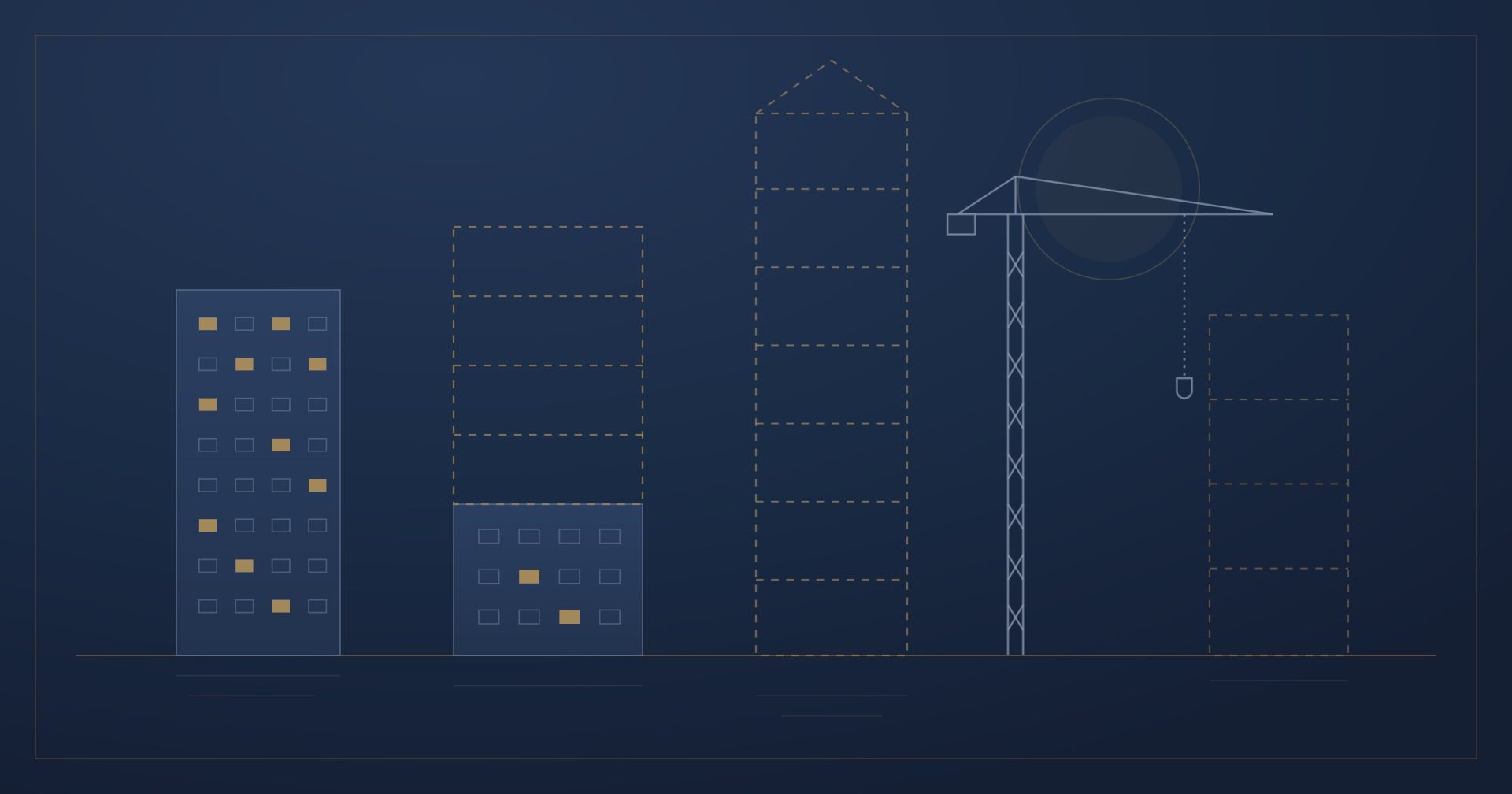
The developer’s dilemma in one picture: costs re-price to today; the revenue was locked in years ago.
Development finance specialists are now warning that projects which appeared viable only months earlier may no longer meet required return thresholds. Even modest increases in construction cost, or delays to a program, can materially alter the result.
The paperwork pipeline is growing faster than the construction pipeline.
And the buyer has a limit
Developers can, in theory, solve rising costs by raising apartment prices. But only to a point. A developer may calculate that a new two-bedroom apartment needs to sell for $1.8 million rather than $1.5 million for the project to stack up. That does not mean a buyer can — or will — pay $1.8 million.
The bank still conducts its valuation. The purchaser still has to obtain finance. The investor still calculates the rental return. And every buyer can compare that new apartment with an established apartment nearby. There comes a price at which the development works perfectly on the developer’s spreadsheet but no longer makes sense to the purchaser. That is the feasibility gap, seen from the other side of the contract.
More development sites may come back onto the market
This is my own assessment of where the cycle goes next, rather than a sourced fact — but I believe we will see another distinct stage of it. Strong developers with appropriate capital, conservative debt, well-bought land and projects in locations where purchasers will pay a premium should continue to build successfully. Other projects will be redesigned, made smaller, converted to build-to-rent, recapitalised with new equity partners or sold on. Some development sites will simply return to the market. And projects carrying excessive debt or unrealistic feasibility assumptions may face considerably more serious outcomes.
The Beulah story matters precisely because this was not an obscure project struggling to attract purchasers. It had extraordinary pre-sales. If a project with that level of buyer commitment can fail to proceed, it demonstrates just how much the economics of development have changed.
The number that matters is not how many dwellings are approved — it is how many are actually built.
What this means in the Eastern Suburbs
For owners here, I see three practical implications. First, if you hold a property with development potential — a site, an amalgamation candidate, an ageing block — the pool of developers who can genuinely fund and deliver a project has narrowed. The buyers who remain are more selective and more disciplined on price, which makes the timing and positioning of any sale a genuine strategic decision, not a listing exercise.
Second, for downsizers weighing an off-the-plan apartment against an established one, the calculus has shifted. An established apartment can be inspected, financed and settled. An off-the-plan contract is a promise — and as STH BNK’s purchasers have learned, receiving a deposit back years later does not put you back where you started. The market has moved, other opportunities have passed, and the replacement apartment may cost considerably more.
Third, constrained new supply tends to support the value of quality established property. If a large share of approved apartments is never built, the established homes and apartments of the Eastern Suburbs carry the demand instead. That is my reading of the data rather than a forecast anyone can guarantee — but it is the direction the numbers point.
Questions to ask before buying off the plan
For anyone considering an off-the-plan purchase, the question should no longer be simply “do I like the apartment?” It should also be:
The due-diligence ledger
- Who is the developer — and what have they actually completed before?
- Has a builder been appointed?
- Has construction finance been secured — not just pre-sales achieved?
- Has construction actually started?
- How long is the sunset period, and who controls it?
- What rights does the contract give the developer to alter or terminate the project?
- If the project does not proceed, what exactly happens to me — and how long could my deposit be tied up?
Australia is left with a strange contradiction. We desperately need more housing. Governments are approving more density. Thousands of apartments exist on planning documents. But developers cannot build at a loss, and purchasers cannot indefinitely absorb rising development costs. The coming shake-out will increasingly separate projects that have planning approval from projects that genuinely have the financial capacity to become buildings. STH BNK may be one of the most spectacular examples of the problem. It is unlikely to be the last.
Weiss Real Estate
Considering a sale — or an off-the-plan purchase?
I’ve advised Eastern Suburbs owners through every development cycle since 1990 — including the ones that ended badly for the impatient. If you hold a site with potential, or you’re weighing new against established, the right strategy starts with an honest read of the numbers.
Request a free appraisal Begin a conversationSources: Urbis data reported by Reuters (August 2026); Urbis metropolitan Sydney research reported June 2026; ABS dwelling commencement data as reported by Reuters; The Urban Developer and receivership reporting on STH BNK by Beulah (2025–26); Housing Industry Association forecasts. Figures marked “reported” reflect media reporting of company and receivership matters. Commentary on future market direction is the author’s own assessment. This article is general commentary only and is not financial or legal advice.