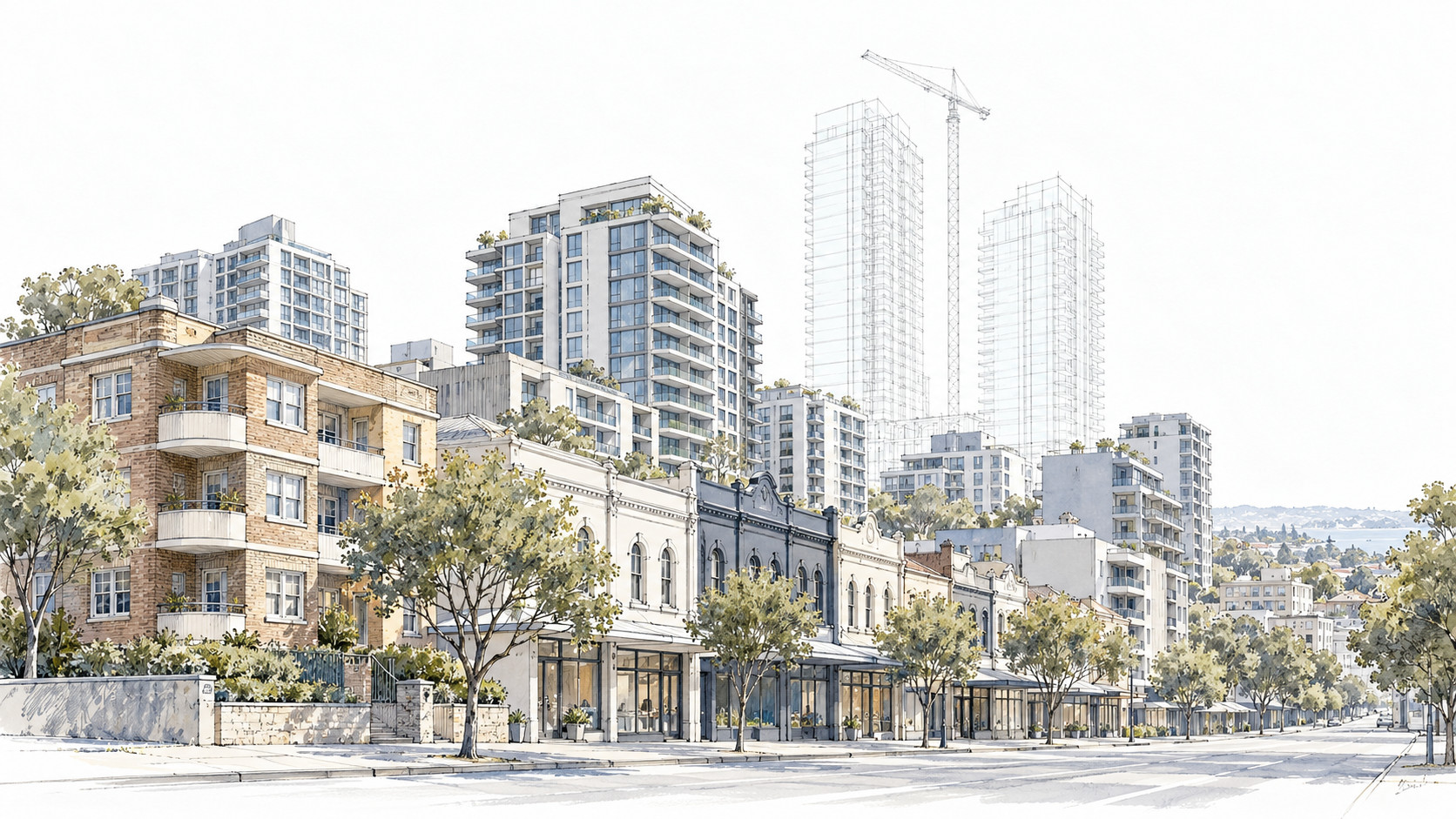
In March, only 12,500 homes were approved for construction. If we continue to build only 12,500 homes each month for the rest of the year, we will construct only 150,000 homes in the next 12 months. However, the government’s target is to build 240,000 new homes every year, which is 40% below its target.
According to a recent SQM Research report, Sydney’s inner west, eastern suburbs, and northern beaches have the tightest housing markets in the country, with only about 0.3 percent of homes in these areas available for purchase. This means that for every 1,000 properties in these areas, buyers can expect only three to be available for sale. The study further revealed that the impact of low stock varies within Sydney’s eastern suburbs, with some areas experiencing even tighter conditions. Notably, Clovelly has the lowest ratio of listed properties at 0.29%, followed by Coogee at 0.33%, and Kingsford at 0.39%.
But why are inventory levels so low in these areas?
- Longer Hold Periods: Across Australia, homeowners are holding onto their properties longer than before, a trend particularly pronounced in Sydney. According to CoreLogic, the average hold period for houses in Sydney nearly doubled from 2002 to 2022, from 5.3 years to 10 years. For apartments, the median hold time increased from 4.3 years to 8.3 years over the same period.
- Increased Renovations: Rather than selling and upgrading, many homeowners are choosing to renovate and stay put. In parts of Sydney’s east, it has become increasingly hard to find a home that hasn’t been improved in some way over the last decade, which reduces the number of properties coming to market.
- Rising Stamp Duty Costs: In Sydney’s eastern suburbs, where property prices are high, rising stamp duty costs deter many from selling. This makes renovating or adapting their current homes more appealing than moving.
- Changing Lifestyles and Expectations: The societal norms around property ownership have evolved. Whereas people used to sell smaller homes or apartments as soon as they considered starting a family, many now choose to stay in smaller spaces to prioritize location over size, reducing the number of homes available for sale.
- Rising Property Costs: The increasing costs of properties make it difficult for some to afford upgrades, with a growing price gap between houses and apartments.
- Lack of Downsizing Options: While many older homeowners are interested in downsizing, there is a shortage of quality properties suitable for this in Sydney’s eastern suburbs. This scarcity leads them to hold onto their larger family homes longer.
These combined factors contribute significantly to the low availability of properties in some of Sydney’s most sought-after areas, impacting both the real estate market and prospective homebuyers.
Why is a lack of property inventory detrimental to the real estate market?
A shortage of properties for sale can significantly impact the real estate market in multiple ways.
Firstly, property prices are largely driven by supply and demand dynamics. When there are fewer properties available, prices typically increase. This can provide a buffer against price drops in a weak market, but in a stable or strong market, it tends to drive prices even higher.
This escalation in prices makes it more challenging for individuals to purchase their first homes or move to larger ones, exacerbating Sydney’s ongoing housing crisis.
For potential buyers, limited inventory complicates the search for a suitable home, extending the duration of the search and intensifying competition when a desirable property is found. This can make it tough for buyers to secure a home that meets their needs.
The situation isn’t entirely favourable for sellers either. Although they might receive a higher price for their property, the difficulty of purchasing another home can offset these gains. Furthermore, with fewer comparable sales, buyers may be unsure of a property’s true value, potentially leading to lower offers.
Additionally, the scarcity of listings can perpetuate itself. Homeowners may delay selling because they cannot find a suitable property to move into. As a result, their own homes remain off the market, further constricting supply. This not only hinders their own relocation plans but also limits options for potential buyers.
Breaking the Cycle of Low Listings
To overcome a period of sparse listings, several developments might occur. On a positive note, an upturn in economic confidence could motivate more homeowners to sell, setting off a chain reaction where more properties are listed.
Alternatively, a less favourable scenario might involve an increase in forced sales if mortgage defaults rise, leading to more homes on the market but also potentially lower prices.
The ideal outcome for Sydney would involve an increase in housing developments, allowing supply and demand to grow concurrently. However, given the current high costs of construction and the scarcity of prime development locations, achieving this would require innovative solutions from both the government and developers.
Interested in purchasing your first home in Sydney’s Eastern suburbs? Contact Alan Weiss for personal service.