There is a quiet assumption sitting underneath many proposed apartment developments in Sydney’s east.
The assumption is simple:
Build large, luxury three-bedroom apartments and the downsizers will come.
On the surface, that sounds logical. Many older owners in Woollahra, Waverley, Bellevue Hill, Rose Bay, Double Bay, Dover Heights, Bondi and surrounding suburbs are sitting on valuable family homes. Their children may have left. The garden may be harder to maintain. Stairs may become less practical. A secure apartment with lift access, parking and village convenience sounds attractive.
But the more closely you look at the numbers, the more complicated the story becomes.
The real question is not whether downsizers exist.
They do.
The better question is this:
How many downsizers are actually willing to swap land, privacy and a long-held family home for a three-bedroom apartment priced at roughly the same level — then pay stamp duty, selling costs, moving costs and strata levies, only to be left with little or no real pocket money?
That is a very different conversation.
The downsizer market is not as large as people think
When people talk about the downsizer market, they often start with the number of residents aged over 60.
That is too broad.
Many older residents live together as couples. Some already live in apartments. Some rent. Some live with family. Others are not financially, emotionally or practically ready to move.
The real downsizer market is not measured by age alone. It is measured by ownership, dwelling type, health needs, lifestyle preference, financial motivation and willingness to leave the family home.
Across Woollahra and Waverley, the 2021 Census recorded approximately 18,870 occupied house-style dwellings when separate houses, semis, terraces and townhouses are combined. Woollahra recorded 4,894 separate houses and 4,602 semis, terraces and townhouses. Waverley recorded 4,405 separate houses and 4,969 semis, terraces and townhouses.
That is the starting point.
But it is not the downsizer pool.
Many of those homes are occupied by young families, younger couples, renters, investors or owners who have no intention of selling. A family living in a semi in Bondi or a house in Woollahra is not part of the downsizer market. A renter living in a terrace is not part of the owner-occupier downsizer market. A younger household with children is not the buyer profile developers are relying on when they describe the “downsizer demand” for prestige apartments.
So the true market is much narrower.
A careful working estimate suggests there may be roughly 4,000 to 7,000 older-owner households across Woollahra and Waverley living in house-style accommodation. If we focus only on separate houses, the figure may be closer to 2,500 to 4,500 households.
That is still a valuable market.
But it is not endless.
And it is not automatic.
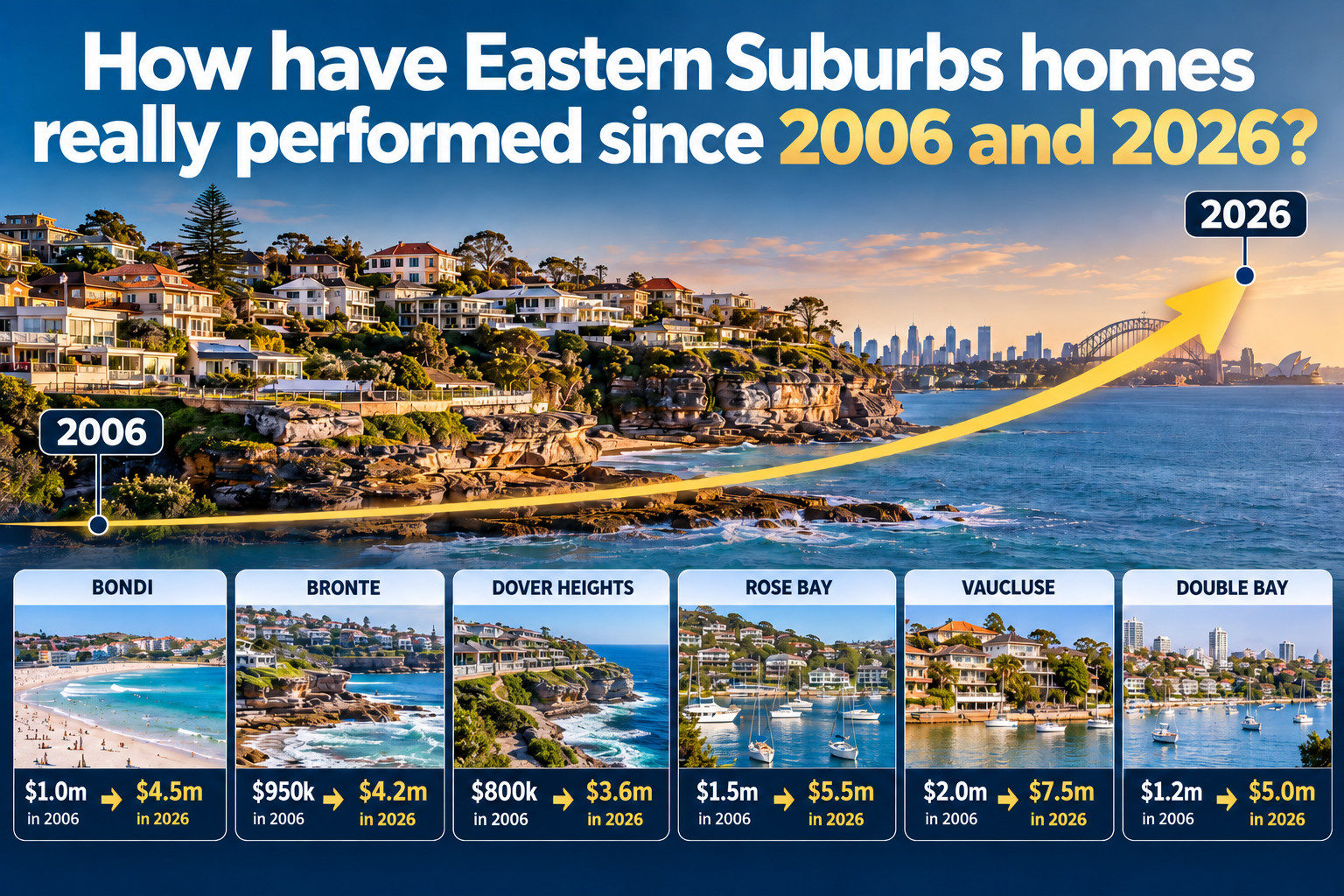
A $7 million apartment is not downsizing — it may be swapping
This is where the current apartment market becomes difficult.
If a family home is worth around $7 million, and the new three-bedroom apartment is also priced around $7 million, what exactly is the owner gaining?
Yes, they may gain lift access, security, less garden maintenance and a more convenient lifestyle.
But they may also lose land, privacy, storage, gardens, family history, future development potential and control.
Then they need to pay the cost of moving.
In New South Wales, premium transfer duty applies above $3.721 million for the 2025–26 financial year. Revenue NSW states that premium property duty is payable when residential property is above the premium threshold.
On a $7 million apartment purchase, the transfer duty is approximately:
$416,197
That is before selling fees, legal fees, moving costs, furnishing costs, strata levies and possible future special levies.
So the financial question becomes very real:
If the replacement apartment costs about the same as the family home, is the owner actually downsizing — or simply changing asset class at great cost?
The proposed apartment market has a feasibility problem
Developers are facing a difficult equation.
Downsizers want large apartments.
They want space, storage, parking, quality, privacy and low-maintenance living. This is why the market has shifted from “downsizing” to “rightsizing”. Recent reporting on the McGrath Rightsizing 2026 research notes that prestige buyers moving from family homes still want generous apartment space, separate living zones, large kitchens and considered storage.
That is not small living.
That is luxury apartment living.
The problem is that large, high-quality apartments are expensive to deliver. Land is expensive. Construction costs remain high. Finance is expensive. Design expectations are higher. Buyers want more parking, better storage, larger terraces, better acoustic separation, premium finishes and boutique presentation.
So developers often need high sale prices to make projects viable.
But if those prices are too close to the value of the family home being sold, the downsizer’s financial motivation weakens.
That is the tension.
The developer needs a high price.
The downsizer needs a reason to move.
The numbers do not always meet in the middle.
Something has to give
For the proposed luxury apartment market to work at scale in Sydney’s east, one of several things must happen.
Apartment prices need to come down.
Land values need to come down.
Construction costs need to come down.
Developer margins need to compress.
Finance costs need to ease.
Or planning controls need to allow more density on the same land.
But each answer has a problem.
If apartment prices come down, many development sites no longer work.
If land values come down, existing owners and developers may resist selling.
If construction costs do not fall, feasibility remains tight.
If more height is needed to spread the land cost across more apartments, the product may become less attractive to the very downsizers it is meant to target.
Many downsizers moving from private homes do not want to live in high-rise towers. They often want boutique, quiet, secure, low- or mid-rise buildings with generous apartments, good parking, privacy and a sense of exclusivity.
That is why this market is so complex.
The economics of development may push toward height and density.
The emotional needs of downsizers often push toward boutique, spacious, low-rise living.
The ageing-in-place alternative
This is where the family home deserves a second look.
For some owners, the family home may not be the problem.
It may simply need to be redesigned for the next stage of life.
Instead of selling, some owners may consider a lift, a ground-floor bedroom suite, safer bathrooms, better access, a self-contained studio, carer accommodation or a secondary dwelling.
That may allow the owner to remain close to family, familiar shops, medical services, friends, clubs, places of worship and community networks.
It may also preserve the land asset.
And when you compare the numbers, the argument becomes stronger.
If transfer duty alone on a $7 million apartment is around $416,000, that amount may go a long way toward adapting the existing home. In many cases, it may fund a meaningful renovation, accessibility upgrade or self-contained accommodation option.
That does not mean every owner should stay.
Some homes are too difficult to maintain. Some sites are unsuitable. Some owners genuinely want the simplicity of apartment living.
But the decision should not be automatic.
Before selling the family home, the owner should ask:
Can this home be adapted?
Can care be brought in?
Can a family member live nearby or on site?
Can the home be made safer?
Can a lift or ground-floor suite solve the problem?
Can a self-contained studio provide flexibility?
Can the family asset be preserved?
The risk for developers
The real risk for developers is not that downsizers do not exist.
The risk is that the industry may be overestimating how many downsizers will act at current price levels.
A downsizer buyer at $6 million or $7 million is not just buying a product. They are making a life decision.
They are comparing the apartment against the emotional and financial weight of the family home.
They are asking whether the move releases enough capital.
They are asking whether strata living suits them.
They are asking whether their children and grandchildren will still have a family base.
They are asking whether they are buying convenience or giving up control.
And increasingly, they may be asking whether the smarter answer is not to move at all.
The opportunity for expert advice
This is where expert real estate advice matters.
The old agent conversation was simple:
“What is your home worth, and what can you buy next?”
That is no longer enough.
The better conversation is:
What is the real cost of moving?
What is the transfer duty?
What is the net capital released?
What are the strata risks?
What is the quality of the replacement apartment?
What happens if the market changes?
What is the emotional cost of leaving?
What are the alternatives to selling?
Can the family home be adapted?
What is the long-term asset strategy?
This is not just selling.
This is strategic property advice.
And in a market this complex, strategy matters more than slogans.
The final question
The proposed apartment market in Sydney’s east is built on the belief that downsizers will continue to sell family homes and buy prestige apartments.
Some will.
The best-designed, best-located, best-priced apartments will still sell.
But the market may be thinner than many people think.
If the family home is worth $7 million and the apartment is also $7 million, downsizing becomes harder to justify. If transfer duty alone is more than $400,000, the decision becomes even harder. If the apartment is high-rise, strata-heavy or short on storage and privacy, the emotional resistance increases.
The real question is not whether Sydney’s east needs more housing.
It does.
The question is whether the proposed apartment product truly matches the financial and emotional reality of the downsizer buyer.
Because if it does not, some owners may choose a very different path.
They may keep the family home.
They may adapt it.
They may add carer accommodation.
They may preserve the land.
They may support their children and grandchildren in other ways.
And they may decide that the smartest downsizing decision is not to downsize at all.